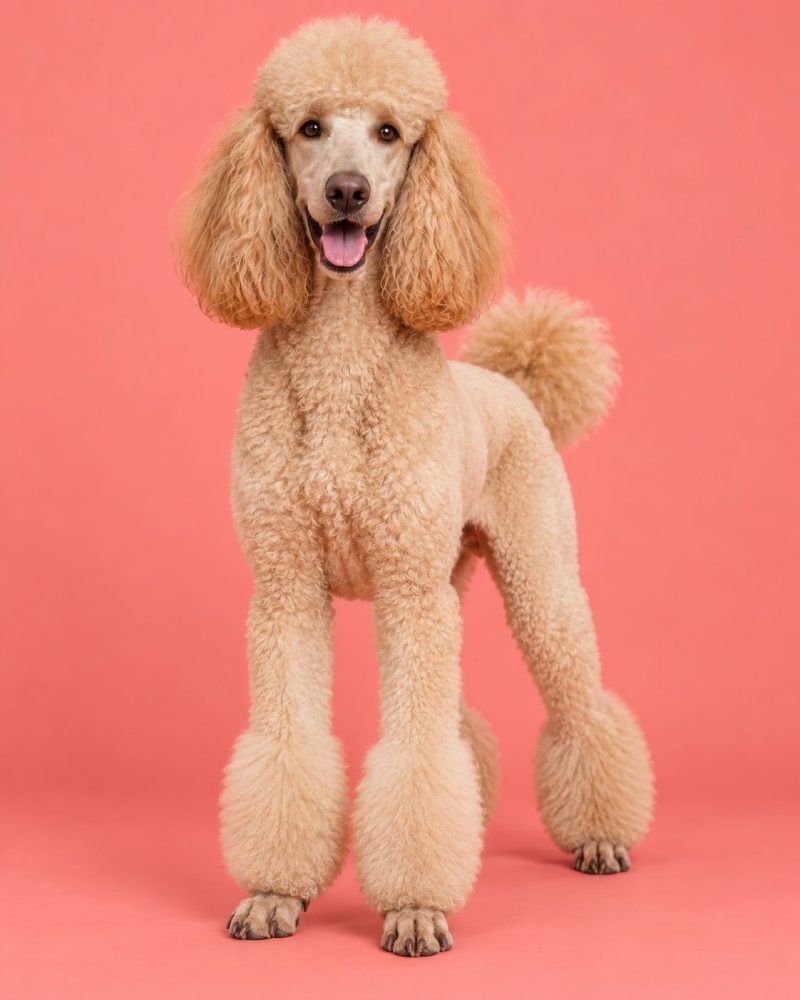
Standard Poodle
An athletic, clever water dog with a costly haircut habit
- Group
- Non-Sporting
- Size
- Large
- Weight
- 40 to 70 lb
- Height
- 18 to 24 in
- Lifespan
- 10 to 18 years
- Coat
- Curly
- Origin
- Germany and France
- Puppy price
- $1,500 to $4,000
- Monthly cost
- $200 to $400 a month
Prices are rough US ranges and vary a lot by region.
Good for
Watch out
The ten scores
higher is easier to live with higher means more work, noise or cost. All scores 1 to 5.
What living with a Standard Poodle is like
Forget the fancy show clips for a moment. A Standard Poodle's coat keeps growing and never stops, and it mats down to the skin if you let it. It needs a full groom every four to six weeks and brushing at home in between. Over a life that often runs past 12 years, that adds up to real money and time. Skip it, and the dog ends up shaved bare at the groomer.
Under the hair is a big, athletic and very smart dog. Standards were water retrievers first, and the famous clip once kept joints warm in cold water while leaving the legs free to swim. They run, swim and pick up new tricks in a few tries. A poodle reads the room well and often seems to know your plans before you do, which is fun until it figures out the word for the vet.
They are people dogs to the core. Most want to be with their family all day and can get anxious when left alone a lot. They shed very little, which some people with allergies find easier, though no dog is allergy-proof. A standard can be sensitive, and a loud, harsh home often makes it nervous. It suits an active, fairly calm household that likes training and does not mind a groomer on speed dial. Grooming prices vary by region, so call around before you commit.
Care basics
Exercise
Plan for at least an hour a day of walks, running and play. Many standards love to swim and retrieve, and they enjoy sports like agility or rally. A tired poodle is a calm one. Short training games count as exercise for the mind.
Grooming
Line brush down to the skin a few times a week with a slicker and a metal comb. Book a groomer every four to six weeks for a bath, clip and nail trim. The ear canals grow hair, so clean or pluck them as your vet suggests. A short pet clip cuts brushing time a lot.
Training
Poodles learn quickly, which means they also learn your mistakes quickly. Keep things fun and fresh, because repeats bore them. Kind, reward-based work suits this sensitive breed. Teach your puppy to stand for brushing and to let you hold its paws, so grooming is not a fight later.
Feeding
Standards run lean, so the goal is fuel without padding. Split the day into two meals and avoid hard exercise right before and after, since bloat is a known risk. Picky eaters are common, and most do better on a steady routine than on endless topper swaps.
Health checks
Ask breeders for hip results, an eye exam and a sebaceous adenitis skin check on the parents. Addison's disease runs in the breed and can look like vague tummy upset, low energy or shaking. Tell your vet about any pattern like that, even if it comes and goes.
Home setup
A standard can live in a large apartment with an owner who gets out daily, but a yard helps. Floors stay cleaner than with most breeds. These dogs want to be in the same room as you, so a busy shared space suits them more than a quiet back room.
Health conditions common in the breed
| Condition | What to know |
|---|---|
| Addison's disease | The adrenal glands make too little of key hormones. Signs can come and go, and blood tests are needed to find it. |
| Sebaceous adenitis | An inherited skin disease that damages oil glands, leading to scaly skin and hair loss. A skin biopsy is used to screen breeding dogs. |
| Bloat (GDV) | Like other large, deep-chested breeds, standards can suffer a twisted stomach. It is an emergency, so ask your vet which warning signs to know. |
Not every Standard Poodle will have these. Your vet can tell you what to screen for and when.
Common behaviour questions
Why does my poodle bark at every small change in the house?
Standards notice everything, from a moved chair to a new car outside. Show them the new thing calmly, reward quiet, and give them enough to do. A busy poodle barks less.
Why does my poodle hide when the brush comes out?
Usually because past brushing pulled mats and hurt. Go back to short, gentle sessions with treats, and keep the coat shorter for a while. A fresh clip at the groomer can reset things.
Why is my standard so jumpy around loud guests?
Many standards are sensitive and dislike chaos. Give them a quiet room to retreat to and let them choose when to say hello. Forcing contact tends to make it worse.
FAQ
Is a Standard Poodle good for people with allergies?
It sheds very little, and some allergic people cope better with it. Allergens are still in the skin, saliva and dander. Spend time with poodles before you commit.
Does my poodle need the show clip?
No. Most pet poodles wear a short, even cut that is easy to keep. The show clip is for the ring.
How is a Standard Poodle different from a Goldendoodle?
The Standard is a purebred with a known size, coat type and set of health tests. A Goldendoodle is a cross, so coat and size vary a lot. Both need regular grooming.
Not veterinary advice. Breed traits are averages and every dog is an individual. Talk to your vet about your own dog's health.
Sources
- ukcdogs.com /standard-poodle
- westminsterkennelclub.org /breed/poodle-standard/
- poodleclubofamerica.org /health/
Similar breeds to compare
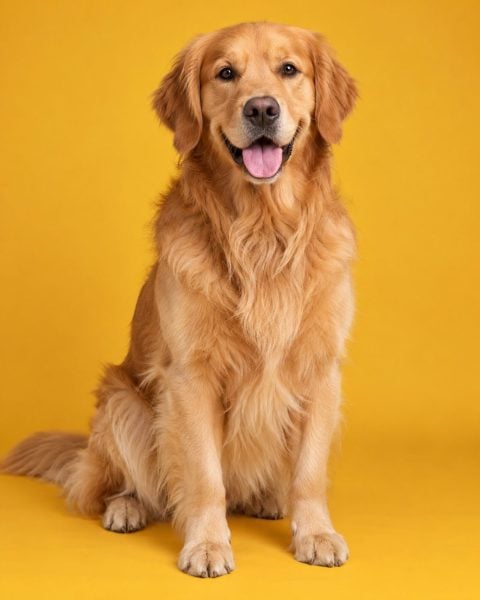
Golden Retriever
Large · 55 to 75 lb · 10 to 12 yrs
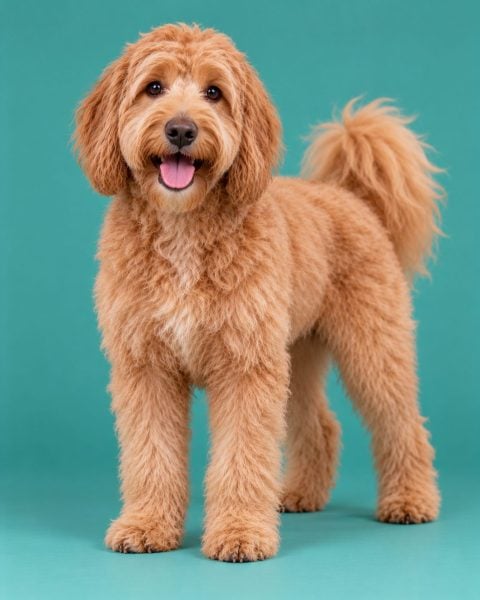
Goldendoodle
Medium · 15 to 80 lb · 10 to 15 yrs
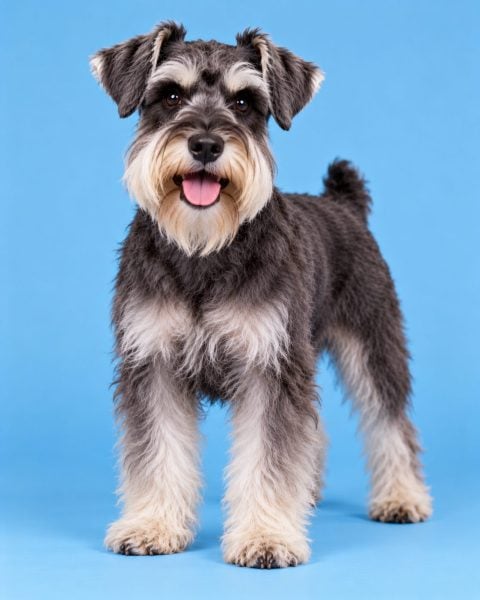
Miniature Schnauzer
Small · 11 to 20 lb · 12 to 15 yrs
The 10-question quiz asks about your home, your week and your patience, then points you to one breed to read about first.