Goldendoodle
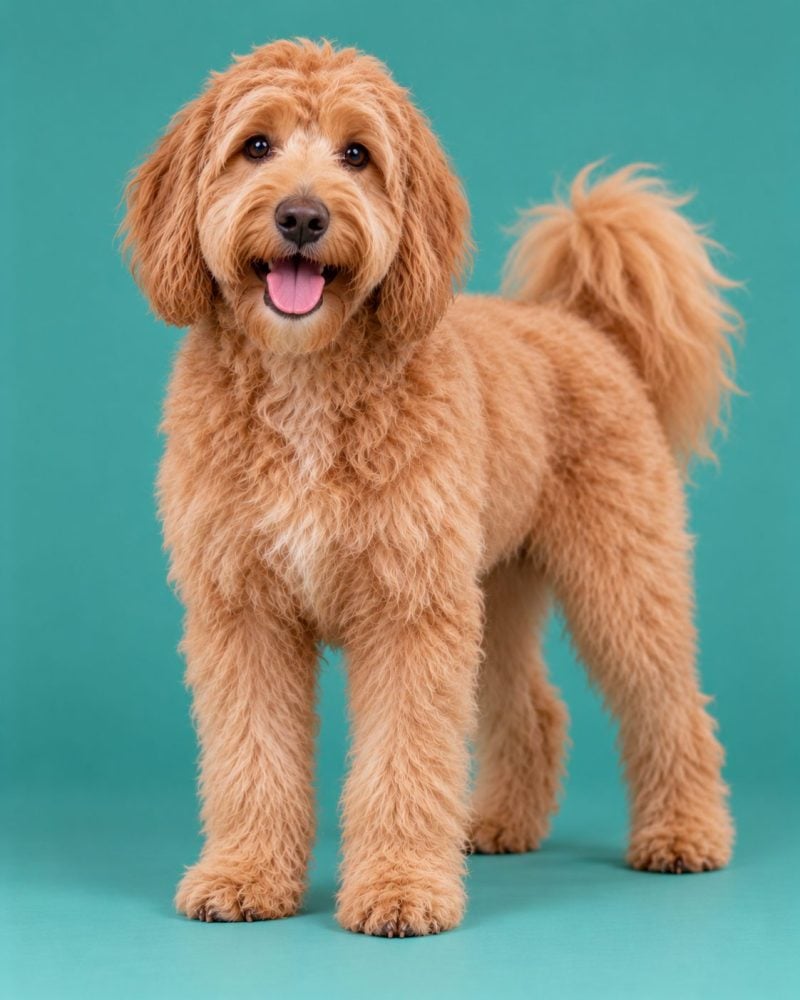
A people-loving Golden and Poodle mix, with a coat that keeps you busy
- Group
- Mixed
- Size
- Medium
- Weight
- 15 to 80 lb
- Height
- 16 to 25 in
- Lifespan
- 10 to 15 years
- Coat
- Curly
- Origin
- United States and Australia
- Puppy price
- $1,500 to $4,000
- Monthly cost
- $150 to $300 a month
Prices are rough US ranges and vary a lot by region.
Good for
Watch out
The ten scores
higher is easier to live with higher means more work, noise or cost. All scores 1 to 5.
What living with a Goldendoodle is like
The Goldendoodle is a cross between a Golden Retriever and a Poodle, and that one fact explains most of what follows. Because it is a mix, not a set breed, size and coat vary a lot. A mini from a Miniature Poodle parent might weigh 20 lb. A standard can top 70. The coat can be straight, wavy or tightly curled, and even puppies in one litter can differ.
The coat is also the biggest cost. Most Doodles need a professional groom every few weeks plus brushing at home, or mats build up between the toes and under the collar. And despite the ads, no dog is allergy-proof. Wavy coats shed more than curly ones. When allergies are the reason you want one, spend real time around the actual dog first.
What people love is the temperament that often comes through from both parents: friendly, keen to learn and happy to be included. A Doodle usually likes kids, other dogs and strangers alike. It also needs real exercise, an hour or two a day for the bigger ones, and a big young Doodle can knock over a toddler in its excitement. Be wary of any seller who promises a set adult size or a coat that never sheds, since nobody can promise that with a cross. Grooming bills depend a lot on where you live, so get quotes early.
Care basics
Exercise
Standards usually need one to two hours a day: walks, fetch, swimming if your dog likes water. Minis need less but still more than a lap dog. Mental work counts too. Scent games and a new trick tire a Doodle out faster than another lap of the park.
Grooming
Brush a few times a week with a slicker brush and a comb, paying attention to armpits, ears and the base of the tail. Plan on a groomer every six to eight weeks. A shorter cut is easier to keep. Check ears after swims, since floppy hairy ears trap moisture.
Training
Doodles learn fast and love rewards. Put the effort into manners early: four paws on the floor for greetings, polite leash walking and a solid recall. A bouncy 60 lb teenager is a lot to handle, so start before it gets big.
Feeding
The right amount depends on which size you end up with, so check with your vet and adjust as the puppy grows. Larger Doodles can be at risk of bloat, so ask about spacing meals and calm time after eating. Weigh your dog every few months, because the fluffy coat hides extra pounds well.
Health checks
Ask the breeder for hip and elbow results on both parents, plus any other tests for the Golden and Poodle side. Get limping looked at. A swollen belly with retching is an emergency. Your vet can tell you what to screen for based on your dog's size and background.
Home setup
Standards do best with room to move and a yard or open space for daily runs. Minis can manage in an apartment with enough walks. Either size wants to be with the family, not alone in a back room. Expect muddy paws and a wet beard after the water bowl.
Health conditions common in the breed
| Condition | What to know |
|---|---|
| Hip dysplasia | A loose hip joint that can lead to arthritis. Both parent breeds can carry it, so parent hip scores are worth asking about. |
| Bloat (GDV) | The stomach fills with gas and can twist, which is life threatening. It is more of a concern in larger Doodles and needs emergency care. |
| Some cancers | Cancers seen in Golden Retrievers can show up in Doodles too. Regular checkups help spot new lumps early. |
Not every Goldendoodle will have these. Your vet can tell you what to screen for and when.
Common behaviour questions
Why does my Goldendoodle jump on every visitor?
Doodles love people and want to be face to face. Ask visitors to ignore the jumping, then reward the moment all four paws hit the floor. Keep a leash on in the first weeks so you can guide it.
My Doodle steals socks and runs off. Why?
Both parent breeds like carrying things, and being chased is great fun. Trade for a toy or treat instead of chasing, and give it things it is allowed to carry.
Why is my Goldendoodle so pushy at the dog park?
Big friendly dogs sometimes play too rough for smaller ones. Watch body language, call it out for short breaks, and leave if the other dog is trying to get away.
FAQ
What do F1 and F1b mean?
F1 is a first cross, half Golden and half Poodle. F1b crosses an F1 back to a Poodle and is often picked by people hoping for less shedding, though nothing is guaranteed.
Does the AKC recognize the Goldendoodle?
No. Major kennel clubs do not recognize it, so there is no official standard for size, coat or color.
How can I guess my puppy's adult size?
Look at the parents, especially the Poodle's size. Even then, ask the breeder for a range, not a promise.
Not veterinary advice. Breed traits are averages and every dog is an individual. Talk to your vet about your own dog's health.
Sources
- en.wikipedia.org /wiki/Goldendoodle
- chewy.com /education/dog-breeds/goldendoodle
Similar breeds to compare

The 10-question quiz asks about your home, your week and your patience, then points you to one breed to read about first.