Bernese Mountain Dog
A big, sweet Swiss farm dog that sheds a lot and loves the cold
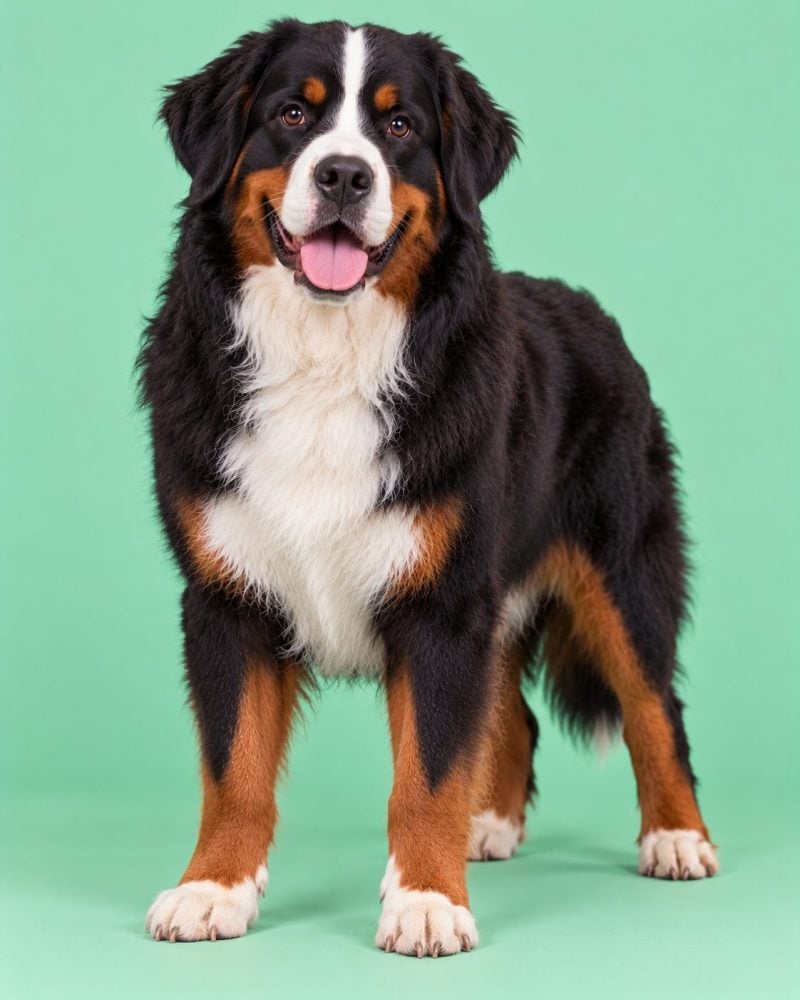
- Group
- Working
- Size
- Large
- Weight
- 70 to 115 lb
- Height
- 23 to 27.5 in
- Lifespan
- 7 to 10 years
- Coat
- Long
- Origin
- Switzerland
- Puppy price
- $2,000 to $5,000
- Monthly cost
- $220 to $400 a month
Prices are rough US ranges and vary a lot by region.
Good for
Watch out
The ten scores
higher is easier to live with higher means more work, noise or cost. All scores 1 to 5.
What living with a Bernese Mountain Dog is like
Bernese Mountain Dogs come from the farms around Bern in Switzerland, where they pulled milk carts and watched the yard. They are patient and good natured, and most adore children. Snow is their favorite weather. On a cold morning, a Berner will lie in a drift and look happier than you have ever seen a dog.
Here is the honest part, and it is a hard one. Berners have a short life, often about 7 to 10 years, and cancer is the leading cause of death in the breed. One type, histiocytic sarcoma, is far more common here than in most dogs. Many families say the hardest thing about the breed is how soon they lose it. Joint problems in the hips and elbows are also common, so ask breeders for hip and elbow scores on both parents.
Then there is the hair. The thick double coat sheds all year and blows out in spring and fall, so tumbleweeds of fur are part of life. Heat is hard on them too. Day to day, they are not frantic. A good walk and some play, then a long nap at your feet, is a normal day. They can be a little shy with strangers. Training is usually easy, which matters, because a 100 pound dog that pulls on the leash is no joke.
Care basics
Exercise
A daily walk of 30 to 60 minutes plus some play suits most adults. Many love hiking and cart pulling once their joints are fully grown. Puppies should avoid long runs and lots of stairs. In summer, keep outings to the cool parts of the day and offer shade and water.
Grooming
Brush several times a week with a slicker brush and an undercoat rake, and daily during the big seasonal shed. A good vacuum is a wise purchase. Check behind the ears and the feathered legs for knots. Bathe every month or two, and allow time, because the coat takes ages to dry.
Training
Berners usually want to please and respond well to gentle, reward based training. Start leash manners and no jumping while your puppy is light. Many are sensitive and a bit slow to mature, so keep sessions short and patient. Early, friendly meetings with strangers help shy pups.
Feeding
Big dog, but not a bottomless one. Overfeeding a growing Berner can push it to grow too fast and add stress to its joints. Use a large breed puppy food and steady portions. In adults, two meals a day and a rest after eating help lower the risk of bloat.
Health checks
Keep a close eye on new lumps, a sudden drop in energy, weight loss or limping, and get them looked at quickly. Hip and elbow problems may show as stiffness after rest. Bloat signs, like retching with nothing coming up, need an emergency vet. Your vet can tell you what to screen for and when.
Home setup
A house with a yard suits a Berner far better than a small flat. Cool floors, air conditioning in summer and space to sprawl make it comfortable. It wants to be with the family indoors, not left outside, even though it loves the cold.
Health conditions common in the breed
| Condition | What to know |
|---|---|
| Histiocytic sarcoma and other cancers | Cancer is the leading cause of death in the breed. Watch for lumps, weight loss or low energy and see your vet promptly. |
| Hip and elbow dysplasia | Poorly formed joints can lead to pain and arthritis. Breeders should screen parents, and keeping your dog lean helps. |
| Bloat (GDV) | The stomach can twist in deep-chested dogs. It is an emergency that needs a vet at once. |
Not every Bernese Mountain Dog will have these. Your vet can tell you what to screen for and when.
Common behaviour questions
Why does my Bernese walk up to strangers and then back away?
Many Berners are friendly but a little shy, so they move in and then lose their nerve. Let them set the pace, and ask guests to stay still and calm. Treats tossed on the floor build trust.
Why does my Berner dig holes in the yard and lie in them?
On warm days, many Berners dig down to cool soil to escape the heat. Give it a shaded spot, a cooling mat and time indoors in a cool room. If it pants hard in mild weather, call your vet.
Why does my Bernese pup chew everything?
Berners mature slowly, and puppy chewing can last two years or more. Give lots of safe chews, rotate them and keep shoes out of reach. Praise it for picking the right thing.
FAQ
How much do Bernese Mountain Dogs shed?
A lot. Expect hair on clothes and floors all year and much more during seasonal sheds. Daily brushing at those times helps.
Are Bernese Mountain Dogs okay in hot climates?
They struggle. They do best in cool or cold places and need air conditioning and shade in warm areas.
Why is the Bernese lifespan so short?
Cancer and joint disease are common in the breed, and big dogs tend to live shorter lives overall. Breed clubs and researchers are working on it, but it is still a major factor.
Not veterinary advice. Breed traits are averages and every dog is an individual. Talk to your vet about your own dog's health.
Sources
- petmd.com /dog/breeds/c_dg_bernese_mountain_dog
- scienceforanimalwelfare.org /species/dogs/bernese-mountain-dog/
Similar breeds to compare
The 10-question quiz asks about your home, your week and your patience, then points you to one breed to read about first.