Great Dane
A gentle giant that leans on you and eats like a horse
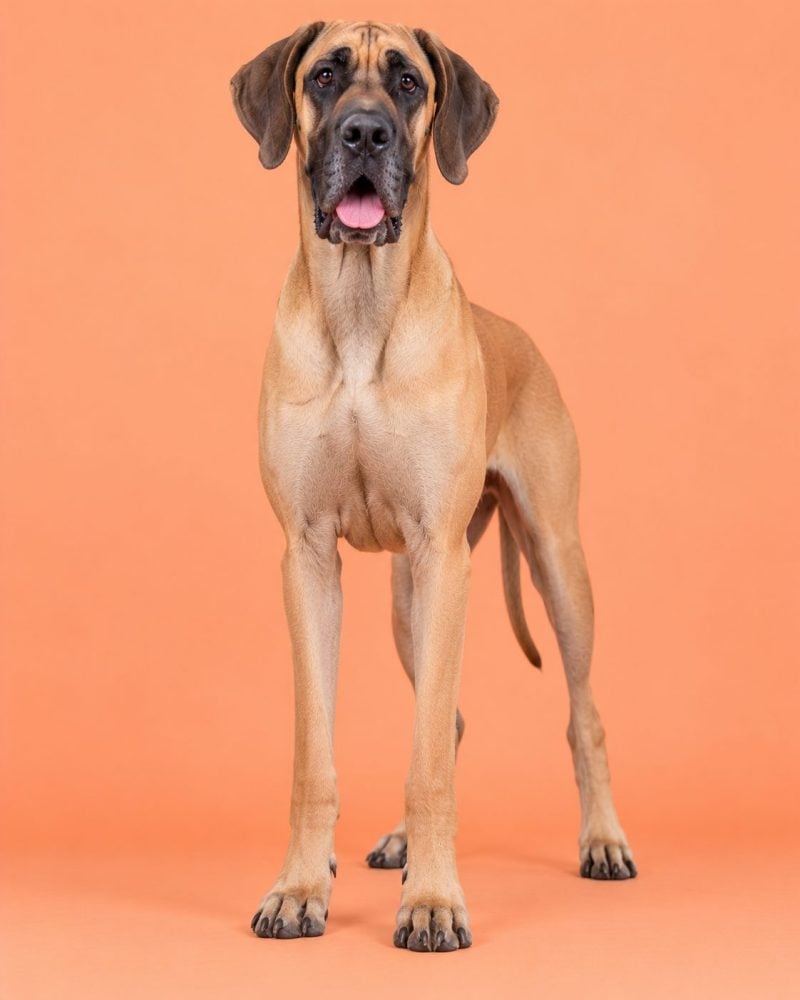
- Group
- Working
- Size
- Giant
- Weight
- 110 to 175 lb
- Height
- 28 to 32 in
- Lifespan
- 7 to 10 years
- Coat
- Short
- Origin
- Germany
- Puppy price
- $1,500 to $4,000
- Monthly cost
- $250 to $450 a month
Prices are rough US ranges and vary a lot by region.
Good for
Watch out
The ten scores
higher is easier to live with higher means more work, noise or cost. All scores 1 to 5.
What living with a Great Dane is like
Your kitchen counter sits at chin height for a Great Dane, and it can rest its head there without standing on its back legs. Nothing left near the edge is safe. Males often top 30 inches at the shoulder and can weigh more than an adult person. Inside that body is usually a calm, soft dog that wants to lean against your legs and sleep on the couch, all of it.
The hardest part is time. Great Danes live about 7 to 10 years, and some sources put it lower. You will share fewer years than with a small dog, and the later ones can bring joint, spine or heart trouble. Bloat is the big emergency to know about. The deep chest lets the stomach twist, and it can kill within hours. Talk to your vet about a preventive stomach tacking surgery, which is often done at the same time as a spay or neuter.
Costs scale with size. Food, beds, crates, medicines and even the car you drive all get bigger. Still, a Dane is not hyper. After a couple of good walks it is happy to lounge, and many live in homes with kids and other pets without trouble. Training is a must early, because a 150 pound dog that jumps or pulls is a real hazard. Teach polite greetings while your puppy is still small enough to manage, and the adult you get will be a quiet, steady giant.
Care basics
Exercise
Two long walks a day suit an adult Dane, plus room to stretch out. Puppies need care, since their bones grow fast, so skip long runs, racing up stairs and hard jumping until your vet gives the okay. Keep hard play away from mealtimes, waiting an hour or two after eating.
Grooming
The short coat is easy, though there is a lot of dog to cover, so expect a fair amount of hair. A weekly rubber brush and a wipe down keep it neat. The real work is nails, which need trimming every couple of weeks, and drool if your dog has loose lips. Keep a towel by the door.
Training
Danes are quick to learn but can dig in their heels, and at this size you cannot just pull. Start loose leash walking and getting off the furniture on cue in puppyhood, with treats. Socialize early and widely, since a shy, fearful giant is hard to live with. A puppy class is worth every cent.
Feeding
Split the day's food into two or three meals and feed from a bowl on the floor, not a raised one. A slow feeder helps fast eaters. Puppies do best on a large breed puppy diet until about 18 months, with steady growth rather than quick growth. Your vet can guide portions as your puppy fills out.
Health checks
Learn the signs of bloat now: retching with nothing coming up, a hard swollen belly, pacing and drooling. Any of those means a trip to an emergency vet. Ask about heart checks as your dog matures. Your vet can tell you what joint and heart screening makes sense.
Home setup
A house with a fenced yard is ideal, though some Danes live well in big flats with a very dedicated owner. Plan for a huge bed, a car that fits the dog and steps it can climb. Keep the tail's swing zone clear, because wagging into walls can split the tip.
Health conditions common in the breed
| Condition | What to know |
|---|---|
| Bloat (GDV) | The stomach fills with gas and twists. It is an emergency and a leading killer of the breed, so learn the signs. |
| Dilated cardiomyopathy | The heart muscle weakens and the heart grows larger. Signs can include coughing, tiring fast and fainting, though some dogs show none early on. |
| Wobbler syndrome | A problem in the neck bones presses on the spinal cord, causing a wobbly walk. It is more common in giant breeds. |
Not every Great Dane will have these. Your vet can tell you what to screen for and when.
Common behaviour questions
Why does my Great Dane lean all its weight on me?
Leaning is a common Dane way of asking for contact. It is sweet, but it can knock over kids or older people. Teach a sit for attention instead and reward that.
My Dane puppy is scared of things like trash cans. Is that normal?
Many Danes go through fear periods, and a large dog that panics is hard to hold. Let it look from a distance, reward calm and move closer slowly. Do not drag it toward the scary thing.
Why does my Dane gulp its food and then look bloated?
Gulping food and air is a risk factor for bloat in deep-chested dogs. Use a slow feeder and smaller meals. A hard, swollen belly with retching is an emergency.
FAQ
Are Great Danes from Denmark?
No. They were developed in Germany to hunt boar and guard estates. The English name stuck for odd historical reasons.
How much does it cost to keep a Great Dane?
More than most breeds. Food alone runs high, and vet bills scale with body size. Pet insurance is worth pricing early, and costs vary by region.
Can a Great Dane live in an apartment?
Some do, as long as they get long walks and there is space to lie flat. Lots of stairs and small lifts make it tougher, especially for an older dog.
Not veterinary advice. Breed traits are averages and every dog is an individual. Talk to your vet about your own dog's health.
Sources
- petmd.com /dog/breeds/great-dane
- scienceforanimalwelfare.org /species/dogs/great-dane/
Similar breeds to compare
The 10-question quiz asks about your home, your week and your patience, then points you to one breed to read about first.