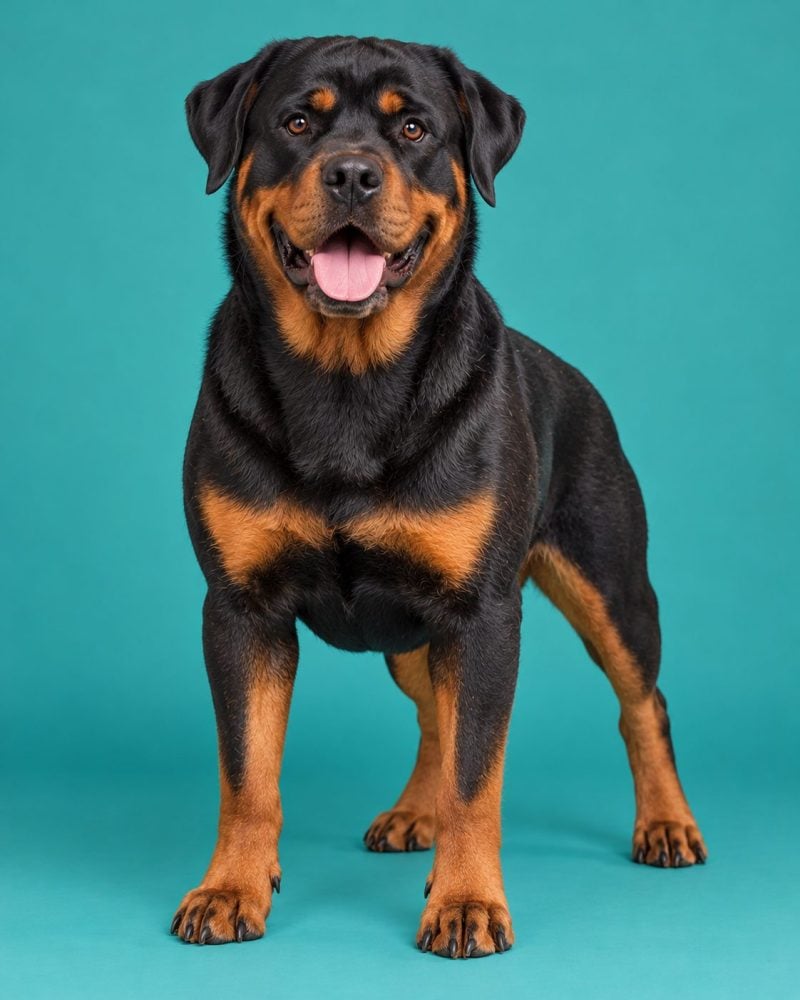
Rottweiler
A powerful, devoted guardian that needs a confident owner
- Group
- Working
- Size
- Large
- Weight
- 80 to 135 lb
- Height
- 22 to 27 in
- Lifespan
- 9 to 10 years
- Coat
- Short
- Origin
- Germany
- Puppy price
- $1,500 to $3,500
- Monthly cost
- $150 to $300 a month
Prices are rough US ranges and vary a lot by region.
Good for
Watch out
The ten scores
higher is easier to live with higher means more work, noise or cost. All scores 1 to 5.
What living with a Rottweiler is like
Some people will cross the street when they see you coming. A Rottweiler is big, strong and protective, and that image follows it everywhere. Some landlords and home insurers turn the breed away, so check your lease and policy before anything else. Then ask yourself whether you can hold a 100 pound dog that has decided to go the other way.
Owners who get it right describe a different dog from the one in movies. A well-raised Rottie is calm at home, silly with its family and steady in public. It likes to lean its full weight on your legs and follow you from room to room. The breed traces back to cattle-driving dogs in the German town of Rottweil, and it still wants a job and a person it trusts.
This is a breed for a confident owner who will train and socialize from day one. Rotties are smart and learn fast, but they test limits as teens. Many are cautious with strangers, and some dislike other dogs of the same sex. They can be loving with the kids in their own family, yet their size and guarding streak call for close watching when visiting children run and shout. Large size also brings large costs, from food to medicine, and a shorter life of about 9 to 10 years. Bone cancer is far more common in this breed than in most, which is a hard thing to plan around.
Care basics
Exercise
About one to two hours a day: brisk walks, fetch, pulling games or a sport like tracking. Rotties are not built for long-distance running and can overheat, so go easy in hot weather. Mental work matters as much as miles. Keep jumping and stairs low while a puppy grows.
Grooming
The coat is short and simple. Brush weekly, more in shedding season, and bathe now and then. Nails grow fast and should be trimmed every couple of weeks, which is easier to teach while the dog is small. Brush teeth, and check the heavy lips for trapped food.
Training
Train early, often and fairly. Rotties respond well to rewards and clear rules, and they shut down or push back under harsh methods. Teach a rock-solid sit, down and leave it before the dog outweighs you. Group classes help a lot with calm behavior around other dogs.
Feeding
A grown Rottweiler eats a lot, so the food bill is real. Large-breed puppy food keeps growth steady, which helps the joints. Split adult portions into two meals to lower bloat risk. Thick muscle can hide extra pounds, so ask your vet to check body condition at each visit.
Health checks
Ask for hip, elbow, heart and eye results on both parents. Watch for limping in middle age, since bone cancer often starts that way. Any lameness that does not clear up in a few days deserves a vet visit, and often an x-ray.
Home setup
A house with a secure yard suits a Rottweiler best. They do poorly living outside away from the family and guard best by being close to you. Set clear house rules for guests, and give the dog a quiet place to go when the door is busy.
Health conditions common in the breed
| Condition | What to know |
|---|---|
| Osteosarcoma (bone cancer) | A UK study found Rottweilers had more than ten times the odds of this cancer compared with crossbreeds. It often shows up first as a limp. |
| Hip and elbow dysplasia | Common in the breed and can lead to arthritis. The American breed club asks breeders to screen parents for both. |
| Subaortic stenosis | An inherited narrowing in the heart. A cardiologist can often find it before signs show, so your vet may suggest a heart check. |
Not every Rottweiler will have these. Your vet can tell you what to screen for and when.
Common behaviour questions
Why does my Rottweiler lean on people?
Leaning is a common Rottie way to stay close, and it is usually affection. A 100 pound lean can still knock over a child or an older guest. Teach a sit for greetings.
Why does my Rottie growl when we play?
Many Rotties make a low rumble when happy. Look at the body: loose and wiggly is fun, stiff and still is not. If you are unsure, ask a trainer to watch.
Why is my teenage Rottweiler ignoring commands it knew last month?
Teen Rotties test limits, often between 8 months and 2 years. Go back to basics, keep rules steady, and reward the right choice. It passes with patience.
FAQ
Are Rottweilers dangerous?
Any large dog can be dangerous if poorly raised or handled. A well-bred, well-socialized Rottie is usually steady and calm. The size means mistakes have bigger results, so training is not optional.
Should I get a male or a female Rottweiler?
Males are often bigger and heavier, and some are pushier. Females are smaller and may mature sooner. The single dog in front of you matters more than its sex.
Do all Rottweilers have docked tails?
In the US many are docked, but natural tails are getting more common, and docking is banned in many countries. A natural tail does not change temperament.
Not veterinary advice. Breed traits are averages and every dog is an individual. Talk to your vet about your own dog's health.
Sources
- ukcdogs.com /rottweiler
- westminsterkennelclub.org /breed/rottweiler/
- pmc.ncbi.nlm.nih.gov /articles/PMC7944903
Similar breeds to compare
The 10-question quiz asks about your home, your week and your patience, then points you to one breed to read about first.