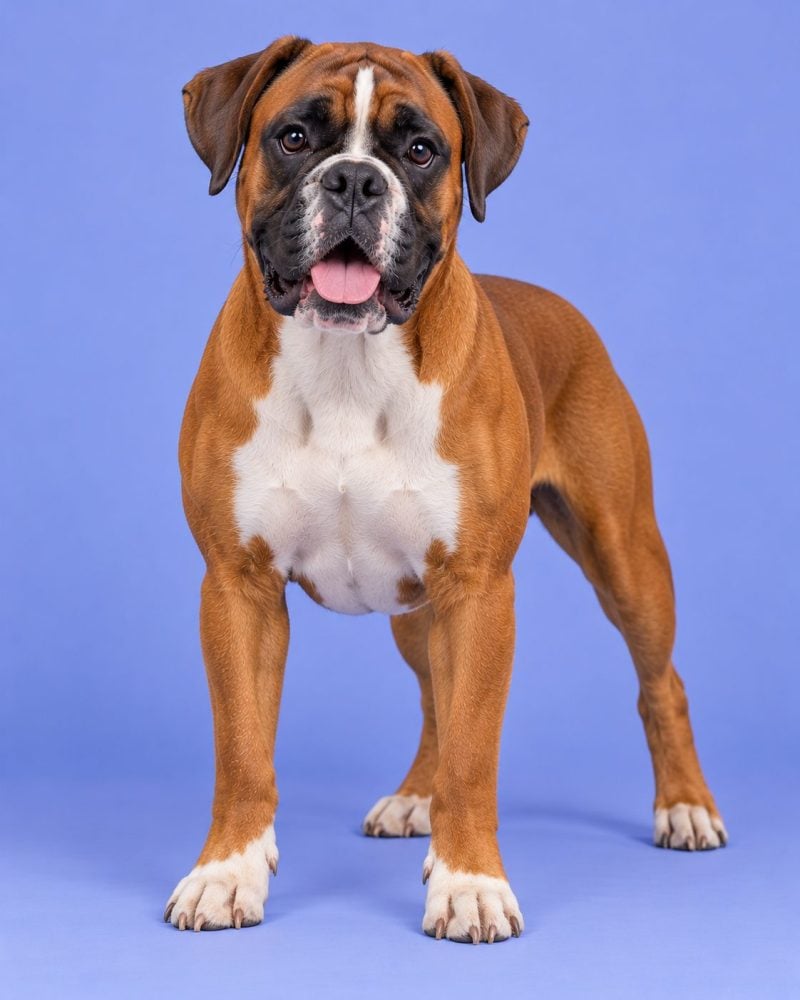
Boxer
A clownish, muscular family dog that stays a puppy for years
- Group
- Working
- Size
- Large
- Weight
- 50 to 80 lb
- Height
- 21.5 to 25 in
- Lifespan
- 10 to 12 years
- Coat
- Short
- Origin
- Germany
- Puppy price
- $1,500 to $3,500
- Monthly cost
- $150 to $300 a month
Prices are rough US ranges and vary a lot by region.
Good for
Watch out
The ten scores
higher is easier to live with higher means more work, noise or cost. All scores 1 to 5.
What living with a Boxer is like
Boxers greet you with their whole body. The back half wiggles, the front paws leave the floor and the face is pressed to yours. Expect a wagging rear and a dog that leans its full weight on your legs. The breed was developed in Germany from older mastiff type dogs, and it kept the strength. It is muscular, bouncy and slow to grow up. Many owners say the puppy phase lasts for years.
The hard part is health. Boxers have a high rate of cancer, and the US Boxer Association also lists heart disease such as aortic stenosis and boxer cardiomyopathy. Lifespan is about 10 to 12 years, shorter than many breeds this size. Vet costs can climb, so pet insurance is worth a look, and prices vary by region. The short muzzle also means less heat tolerance, so summer walks need care. None of this means a Boxer will get sick, but you should go in with eyes open.
Still, Boxers are among the most loving family dogs around. They tend to be patient and playful with kids who know the rules, and they stay alert to strangers at the door. The short coat is easy, needing little more than a weekly rub. Most love a game of chase in the yard and a long nap on the couch after. They need an owner who teaches manners early. A 70 lb dog that jumps on guests is no joke.
Care basics
Exercise
Aim for an hour or more each day of walks and play. Boxers love fetch, chase games and running in a fenced yard. Keep it light in heat and humidity, and walk early or late in summer. Cold snaps can bother them too, given the thin coat.
Grooming
This is the easy part. A rubber brush or mitt once a week takes off loose hair. Wipe the face folds if they get grimy. Baths are needed only when they roll in something. Keep the nails short, because those strong legs scratch floors.
Training
Boxers are bright but bouncy, and they can be stubborn. Keep sessions short and fun, and stop before boredom sets in. Teach four paws on the floor early, with rewards for sitting at greetings. Puppy class gives social practice. Big praise works well with this people loving dog.
Feeding
A growing Boxer puppy is mostly legs and appetite. Ask your vet whether a large breed puppy diet fits, and aim for slow, steady growth. Adults usually do well on two measured meals a day. Watch the waistline as activity drops in middle age.
Health checks
Ask about heart screening. The US Boxer Association recommends a Doppler echo, a yearly 24 hour Holter test and a one time DNA test for ARVC. Check the skin often for new lumps and show your vet anything that appears. Fainting or collapse is an emergency.
Home setup
A house with a fenced yard suits them best. They hate being left out of family life and do not cope well alone for long days. Keep them indoors in hot weather and never in a parked car. Sturdy toys help, as Boxers are tough on chews.
Health conditions common in the breed
| Condition | What to know |
|---|---|
| Cancer | Boxers are at risk of several cancers, including skin tumors and lymphoma. Getting new lumps checked early matters. |
| Boxer cardiomyopathy (ARVC) | An irregular heartbeat that can cause fainting, heart failure or sudden death. Yearly Holter testing is advised. |
| Aortic stenosis | A narrowing at the aortic valve, often found as a murmur with no other signs. Your vet can tell you what to screen for and when. |
Not every Boxer will have these. Your vet can tell you what to screen for and when.
Common behaviour questions
Why does my Boxer jump on everyone?
Boxers greet face to face, and jumping gets them there. Turn away and reward four paws on the floor. Ask guests to do the same so the rule stays clear. Keep a leash on indoors at first so you can guide it.
Why does my Boxer punch with its front paws in play?
That boxing move is typical of the breed's play style. It is fine with dogs that enjoy it. Redirect to a tug toy when it gets too rough with people or kids.
Why does my Boxer get the zoomies at night?
Short bursts of running are normal for a young, energetic dog. Make sure the day includes enough play. Clear a safe space, wait it out, then offer a chew to settle.
FAQ
Are Boxers good guard dogs?
They are alert and will bark at strangers, which can deter people. Most are friendly once they meet someone. Leave protection training to professionals. A Boxer's size alone often makes visitors think twice.
How much do Boxers weigh?
AKC lists males at 65 to 80 lb and 23 to 25 in. Females are about 15 lb lighter and a bit shorter.
When does a Boxer calm down?
There is no fixed age, and many stay playful for years. Training, exercise and routine help more than waiting. Ask your vet if energy changes suddenly.
Not veterinary advice. Breed traits are averages and every dog is an individual. Talk to your vet about your own dog's health.
Sources
- akc.org /dog-breeds/boxer/
- usboxer.org /health-issues
Similar breeds to compare

The 10-question quiz asks about your home, your week and your patience, then points you to one breed to read about first.