Boston Terrier
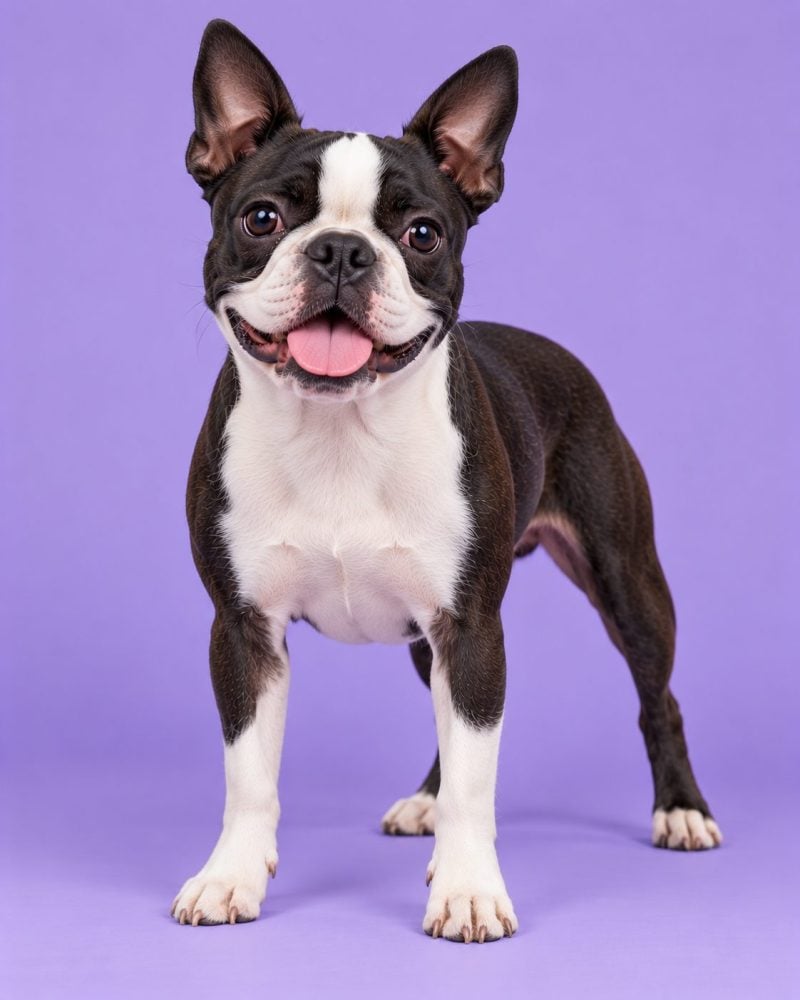
A sharp-dressed, cheerful American companion with a short coat and big eyes
- Group
- Non-Sporting
- Size
- Small
- Weight
- 12 to 25 lb
- Height
- 15 to 17 in
- Lifespan
- 11 to 13 years
- Coat
- Short
- Origin
- United States
- Puppy price
- $1,200 to $3,500
- Monthly cost
- $90 to $180 a month
Prices are rough US ranges and vary a lot by region.
Good for
Watch out
The ten scores
higher is easier to live with higher means more work, noise or cost. All scores 1 to 5.
What living with a Boston Terrier is like
Boston Terriers were first bred in Boston around 1870, and they still carry that tidy black and white tuxedo look. They are small, sturdy and quick to laugh with you, or at least that is how it feels. Most love people of all ages and treat a game of tug like a sport.
Two weak spots come with the build. The big round eyes stick out, so they get scratched and injured more than you would think, and the breed is also prone to inherited cataracts. The short face means many Bostons snore and some struggle to breathe in heat. Look for a puppy whose parents have had their eyes checked and do not wheeze. Keep walks gentle on warm days and learn what heat stress looks like.
If you can manage those, a Boston fits into most homes. It is happy in a small flat, barks only now and then and has a coat that needs little more than a quick weekly brush. It is bright and generally eager to learn. It also has a goofy, stubborn streak, and some males can be pushy with other male dogs. An hour of walks and play a day keeps most of them calm in the evening. Many owners find the breed gets them talking to strangers, because people stop to ask about that coat.
Care basics
Exercise
Plan for up to an hour a day, split into walks and short bursts of play. Bostons love chasing a ball, a quick round of tug and puzzle toys. They tire fast in the heat, so in summer move walks to cooler hours. On cold, wet days a thin coat helps, since the short fur gives little warmth.
Grooming
This is one of the easiest coats around. A rubber brush once a week lifts loose hair, and a bath every month or two is enough. Spend your effort on the face instead. Wipe around the eyes and any facial folds gently, and trim the nails every few weeks.
Training
Bostons pick up tricks fast and like learning, though they turn stubborn when bored. Use rewards, keep it playful and change the game often. Early meetings with other dogs help, since some males get bossy. Teach them not to jump up, because they are small but bouncy.
Feeding
Two smaller meals a day suit most Bostons better than one big one, since many gulp air as they eat. A slow feeder bowl can help with both speed and gas. Keep them lean. Your vet can show you how to feel for a waist from above.
Health checks
Look at your dog's eyes every day. A red, cloudy or half closed eye is a same day vet call, not a wait and see. Ask your vet to check breathing, knees and skin at yearly visits. Your vet can tell you what to screen for at each age.
Home setup
A flat or a house both work, as long as the dog lives indoors with you. Keep sharp branches and thorny bushes trimmed back from eye height. Bostons are polite with guests but alert, so expect a few barks when the doorbell rings.
Health conditions common in the breed
| Condition | What to know |
|---|---|
| Eye injuries | The large, prominent eyes are easy to scratch, and corneal ulcers are common. Fast treatment helps save sight. |
| Hereditary cataracts | The breed is one of the most affected by inherited cataracts, which cloud the lens. Ask breeders about eye testing. |
| Brachycephalic airway syndrome | The short muzzle can narrow the airway, causing snoring, overheating and trouble with exercise. |
Not every Boston Terrier will have these. Your vet can tell you what to screen for and when.
Common behaviour questions
Why does my Boston Terrier hump toys and guests?
Often it is overexcitement, not a bid to be the boss. Calmly move your dog away, give it a job like sitting on a mat, and reward the calm. Ask your vet if it keeps up after neutering.
My Boston goes wild with zoomies every night. How do I calm it?
Short bursts of mad running are common in this breed, especially in young dogs. A sniff walk and a puzzle toy in the late afternoon often take the edge off. Keep the zoomies on rugs so it does not slip.
Why does my Boston growl at other male dogs?
Some males can be pushy with dogs of the same sex. Keep greetings short, reward calm looks and avoid tight spaces like doorways. A trainer can help if it grows.
FAQ
How big do Boston Terriers get?
Most weigh 12 to 25 pounds and stand about 15 to 17 inches tall. The AKC splits them into three weight classes, all under 25 pounds.
Is a Boston Terrier a real terrier?
It came from a mix of bulldog and terrier types, but today it sits in the AKC Non-Sporting group. It has far less of the digging and hunting drive of most terriers.
Can Bostons handle cold weather?
Not well on their own. The coat is short and thin, so a jacket helps on winter walks, and they should live indoors.
Not veterinary advice. Breed traits are averages and every dog is an individual. Talk to your vet about your own dog's health.
Sources
- pdsa.org.uk /pet-help-and-advice/looking-after-your-pet/puppies-dogs/small-dogs/boston-terrier
- scienceforanimalwelfare.org /species/dogs/boston-terrier/
- en.wikipedia.org /wiki/Boston_Terrier
Similar breeds to compare

The 10-question quiz asks about your home, your week and your patience, then points you to one breed to read about first.