Pug
A clownish, cuddly house dog that struggles with heat and breathing
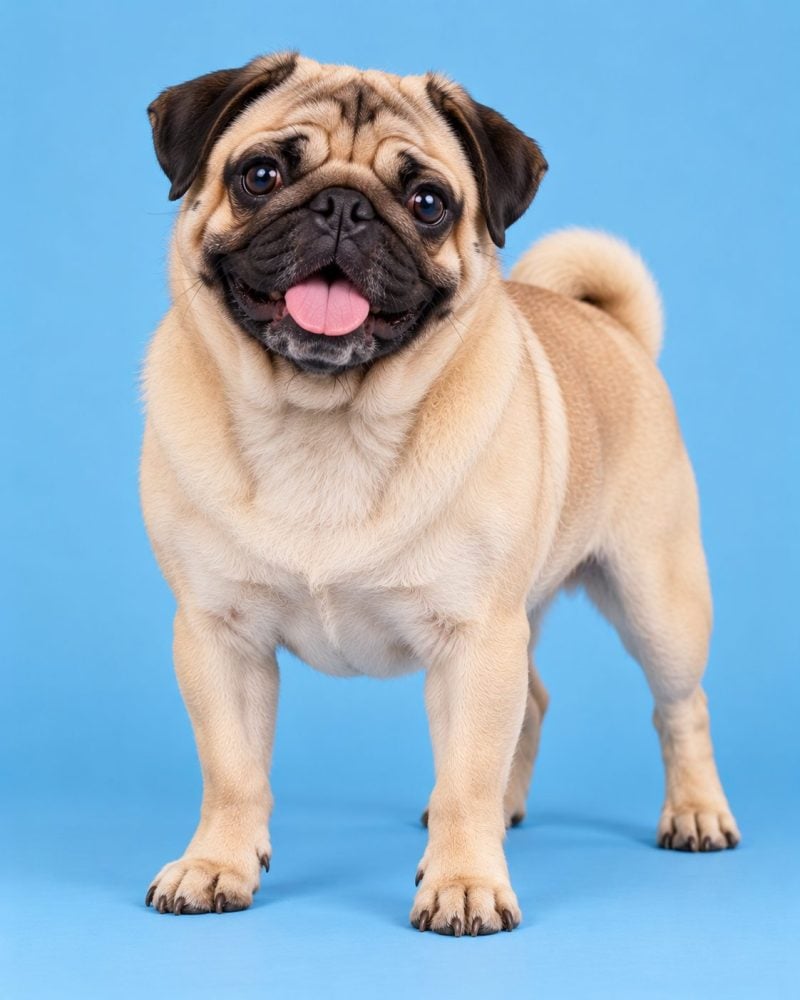
- Group
- Toy
- Size
- Small
- Weight
- 14 to 18 lb
- Height
- 10 to 13 in
- Lifespan
- 13 to 15 years
- Coat
- Short
- Origin
- China
- Puppy price
- $1,500 to $4,000
- Monthly cost
- $100 to $200 a month
Prices are rough US ranges and vary a lot by region.
Good for
Watch out
The ten scores
higher is easier to live with higher means more work, noise or cost. All scores 1 to 5.
What living with a Pug is like
Before you meet a Pug, you usually hear it. The snort, the snuffle and the snore come with the flat face, and in many dogs they are more than cute noise. That short muzzle squeezes the airway. Lots of Pugs have narrow nostrils and a long soft palate, which makes breathing hard work, most of all on hot days. Heat can turn serious fast. This is the downside to take seriously, and the reason to look for a puppy whose parents breathe quietly.
Now the good part. A Pug is about as social as dogs get. It wants to be on the sofa, in the kitchen and in the middle of whatever you are doing. It is rarely snappy, it often gets on with other pets, and it loves visitors. Many owners say living with one feels like having a small comedian who follows you around. Pugs are not built for long runs, so they suit people who like gentle strolls more than hikes.
Expect shedding. The short coat looks low effort, but it drops hair all year and more in spring and fall. You will also clean face wrinkles and keep a close eye on weight. A Pug is food driven and will look hungry five minutes after dinner. Stay firm, because every extra pound makes breathing harder. A slim Pug is a happier, more playful Pug.
Care basics
Exercise
A few short walks of 15 to 20 minutes spread over the day suit most Pugs better than one long outing. Add games of fetch down the hallway. In summer, walk at dawn or after dark, and skip the walk when it is very hot and humid. Loud, raspy breathing, a blue tongue or collapse needs a vet straight away.
Grooming
Brush the short coat at least once a week, and daily during heavy shedding, to keep hair off the furniture. Wipe inside the nose wrinkle with a soft damp cloth and dry it well, since trapped moisture leads to sore skin. Check the big eyes daily for redness or squinting. Trim nails often, as Pugs rarely wear them down.
Training
Pugs learn well when food is involved and lose interest fast when it is not. Use tiny treats and short, cheerful sessions. House training can take patience, especially in rain or cold. Teach a calm settle on a mat early, so excitement does not leave your dog gasping for air.
Feeding
Measure every meal, and cut each treat down to the size of a pea. This breed begs with real skill. Lean Pugs breathe more easily and move better, so keeping one slim is one of the kindest things you can do. Ask your vet what weight to aim for, and check it monthly at home.
Health checks
Have your vet assess breathing at each visit and ask whether airway surgery could help. Eyes need fast attention if one looks cloudy, red or half shut, since ulcers can get worse within a day. Your vet can also check skin folds, ears and teeth. Anesthesia carries more risk for flat-faced dogs, so talk it through before any procedure.
Home setup
An apartment suits a Pug well as long as it stays cool. Air conditioning is a real need in hot places, not a treat. Use a harness instead of a collar to keep pressure off the throat. A Pug should never be left in a car, even for a few minutes.
Health conditions common in the breed
| Condition | What to know |
|---|---|
| Brachycephalic airway syndrome (BOAS) | Narrow nostrils, a long soft palate and a tight windpipe make breathing harder. It can cause snoring, limits on exercise and dangerous overheating. |
| Eye injuries and ulcers | Shallow eye sockets leave the eyes exposed to bumps and scratches. Any squinting or cloudiness should be seen quickly. |
| Skin fold infections | The wrinkles on the face can trap moisture and germs. Gentle daily cleaning and drying helps. |
Not every Pug will have these. Your vet can tell you what to screen for and when.
Common behaviour questions
My Pug makes a loud honking sound and seems to choke. What is that?
That is often a reverse sneeze, a spasm in the throat that is common in flat-faced breeds. It usually passes in under a minute. If it happens a lot, or comes with blue gums or fainting, see your vet.
Why does my Pug steal food off the counter?
Most Pugs are ruled by their stomachs. Keep food out of reach, feed meals at set times and reward your dog for leaving dropped food alone. Do not leave it alone in a room with snacks.
Why does my Pug stop and sit down halfway through a summer walk?
It may be telling you it is too hot to breathe well. Trust that signal, head home slowly and try again when it is cooler. A cooling mat and shade at home help too.
FAQ
Are Pugs okay for people with allergies?
No dog is allergy-proof, and Pugs shed quite a lot. If allergies are a worry, spend time with an adult Pug before you decide.
Can a Pug live in a hot climate?
Only with careful planning. It needs air conditioning, walks at cool times of day and an owner who knows the signs of heatstroke.
Do Pugs get along with other dogs?
Most do, and many enjoy a calm dog friend. Rough, fast play can leave them short of breath, so keep games gentle.
Not veterinary advice. Breed traits are averages and every dog is an individual. Talk to your vet about your own dog's health.
Sources
- petmd.com /dog/breeds/pug
- scienceforanimalwelfare.org /species/dogs/pug/
Similar breeds to compare
The 10-question quiz asks about your home, your week and your patience, then points you to one breed to read about first.