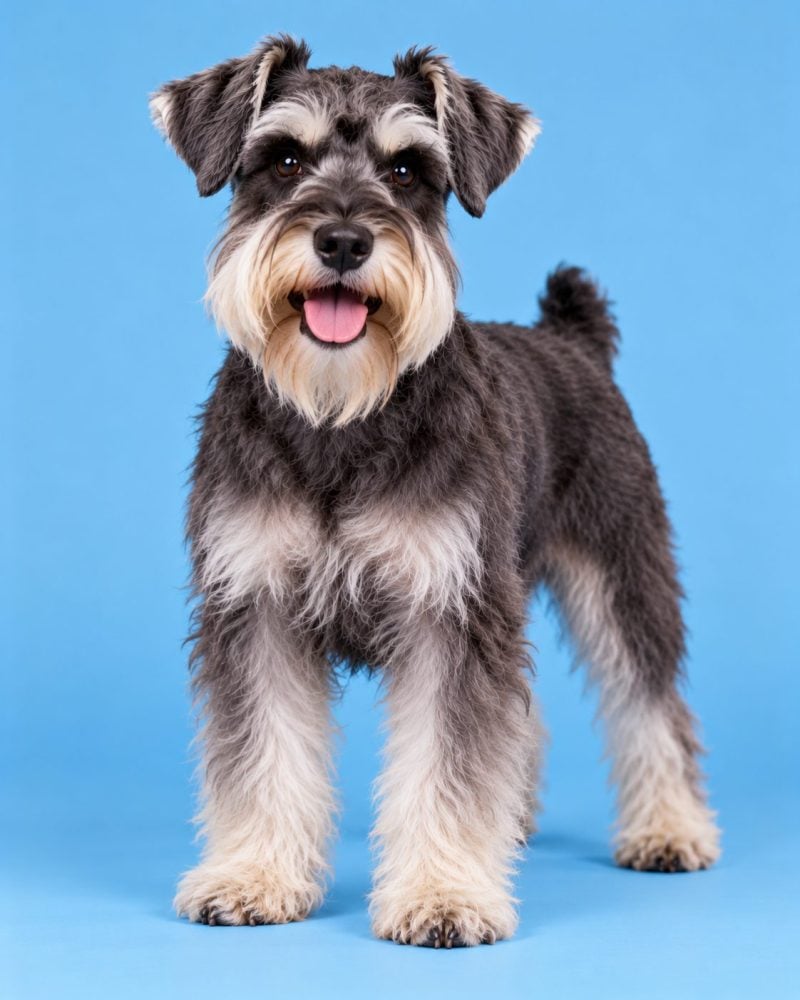
Miniature Schnauzer
Bearded, bright and loud, a small farm dog with a big voice
- Group
- Terrier
- Size
- Small
- Weight
- 11 to 20 lb
- Height
- 12 to 14 in
- Lifespan
- 12 to 15 years
- Coat
- Wire
- Origin
- Germany
- Puppy price
- $1,500 to $3,500
- Monthly cost
- $100 to $200 a month
Prices are rough US ranges and vary a lot by region.
Good for
Watch out
The ten scores
higher is easier to live with higher means more work, noise or cost. All scores 1 to 5.
What living with a Miniature Schnauzer is like
Somewhere outside, a squirrel moved. Your Miniature Schnauzer saw it, and now the whole street knows. This small German farm dog comes with an alarm system built in, and barking is the thing most owners wish they had planned for. Training helps a lot. It rarely goes away completely. In a shared building, a dog that sounds off at every jogger can wear thin with the neighbors, so think about where you live.
Beyond the noise, Mini Schnauzers are sturdy, bright and funny. At 11 to 20 lb, they are tough enough for a family with school-age kids and small enough for a flat. They want to be part of everything, from errands to board game night. Most learn fast and like having a job, even if the job is finding a hidden treat. Many do well in obedience or agility classes, and they are usually friendly with visitors once the alarm is over.
Two more things to know before you commit. The wiry coat sheds little, but it keeps growing, so you will need a groomer every couple of months or a lot of practice with clippers. And the breed has a known tendency toward high blood fats and pancreatitis, which makes rich table scraps a real risk. Costs differ by region, so price out grooming near you before the puppy comes home.
Care basics
Exercise
Plan on about an hour of activity a day, split into walks and play. Schnauzers love sniffing games and short training drills. Keep the leash on near roads or open fields. They chase small moving things and do not always come back when called.
Grooming
Brush at least once a week to stop mats in the leg and beard hair. Book a trim about every eight weeks. Wipe the beard after meals, since food and water collect there. Dry the ears after baths, and keep the hair over the eyes short so the dog can see.
Training
Teach a one-bark rule early: let the first bark go, then cue quiet and reward. Mini Schnauzers learn fast and get bored with repetition, so mix it up. Recall work in a fenced space is worth the time. Early outings help them meet new dogs calmly.
Feeding
Fat is the thing to watch with this breed. Skip greasy scraps, bacon bits and buttery leftovers, which are common triggers for tummy trouble. Ask your vet whether a lower fat diet makes sense for your dog. Measure meals, since a Schnauzer will happily tell you it is still hungry.
Health checks
Ask your vet whether a blood fat test belongs in routine bloodwork. Report vomiting, belly pain or sudden low energy quickly. Eye checks help catch cataracts. Feel for small bumps along the back while brushing. Your vet can tell you what to screen for.
Home setup
Fits an apartment if you can handle barking near windows. Frosted window film or closed blinds cut down on triggers. A fenced yard is nice but not needed. They like a view of the action, so give them a bed where they can see the family.
Health conditions common in the breed
| Condition | What to know |
|---|---|
| Hyperlipidemia | Common in the breed, this means too much fat in the blood. It shows up on blood tests and is often managed with diet, sometimes with medication. |
| Pancreatitis | The breed is predisposed to this painful swelling of the pancreas. Vomiting, belly pain and tiredness need a vet visit the same day. |
| Schnauzer comedo syndrome | Blackhead-like bumps form along the back. It is usually a skin nuisance rather than a danger, and your vet can suggest how to manage it. |
Not every Miniature Schnauzer will have these. Your vet can tell you what to screen for and when.
Common behaviour questions
How do I stop my Schnauzer barking at the mail carrier?
The mail carrier leaves every day, so to your dog the barking works. Move its resting spot away from the front window and practice quiet with a helper ringing the bell. Reward calm before the barking starts.
Why does my Mini Schnauzer chase the cat?
It was bred as a farm ratter, so quick small animals set it off. Many live fine with cats they grew up with. Keep early meetings on leash and give the cat escape routes.
My Schnauzer's beard smells. What helps?
The beard soaks up food and water. Wipe it after meals and rinse it during baths. A smell that does not go away can mean a mouth or skin problem, so mention it to your vet.
FAQ
Is a Miniature Schnauzer a terrier?
The AKC puts it in the Terrier Group, though it comes from German farm dog stock rather than British terriers. It shares the same alert, busy streak.
Do Miniature Schnauzers shed?
Very little, because the wiry coat holds loose hair. That coat needs regular trimming instead.
What colors do Mini Schnauzers come in?
Salt and pepper, black, and black and silver are the AKC colors. White dogs exist, but the AKC does not accept that color.
Not veterinary advice. Breed traits are averages and every dog is an individual. Talk to your vet about your own dog's health.
Sources
- en.wikipedia.org /wiki/Miniature_Schnauzer
- petmd.com /dog/breeds/miniature-schnauzer
Similar breeds to compare
The 10-question quiz asks about your home, your week and your patience, then points you to one breed to read about first.