Saint Bernard
A calm Alpine giant with a soft heart and a short life
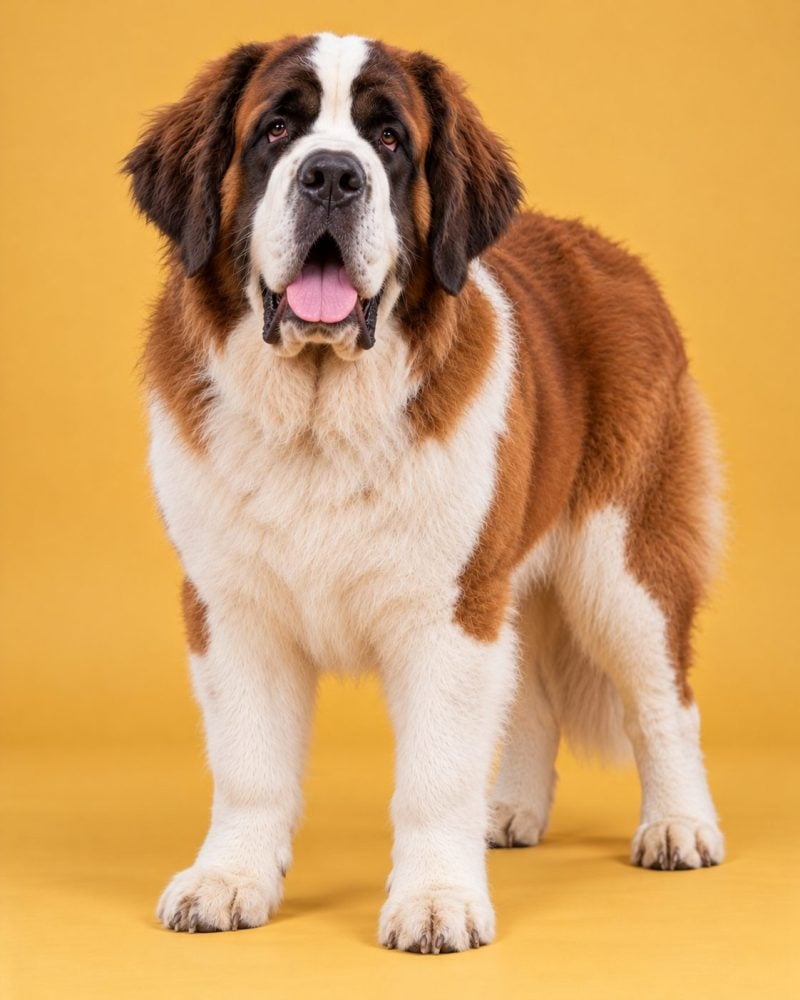
- Group
- Working
- Size
- Giant
- Weight
- 120 to 180 lb
- Height
- 26 to 30 in
- Lifespan
- 8 to 10 years
- Coat
- Medium
- Origin
- Switzerland
- Puppy price
- $1,500 to $3,000
- Monthly cost
- $200 to $400 a month
Prices are rough US ranges and vary a lot by region.
Good for
Watch out
The ten scores
higher is easier to live with higher means more work, noise or cost. All scores 1 to 5.
What living with a Saint Bernard is like
Up at the Great St Bernard Pass in the Swiss Alps, monks kept big dogs to find travelers lost in the snow. The most famous, Barry, is credited with saving dozens of lives. The little barrel of brandy around the neck came mostly from a painting. The monks say their dogs never carried one.
Today's Saint is a much bigger animal, often 120 to 180 lb, and that size drives everything else. It drools, sometimes in long strings. It sheds steadily and heavily twice a year. It eats a lot, needs a big car, and costs a lot at the vet. The hardest part is how short the life is. Many Saints live only 8 to 10 years, and bone cancer, heart disease and bloat are all known in the breed. Heat is also dangerous for them. A Saint in a hot place needs air conditioning and early morning walks, full stop.
Inside the home, Saints are usually calm, patient and slow to anger. Many are gentle with children, though a wagging tail can clear a coffee table and a happy puppy can flatten a small kid. They are not natural guard dogs, but their size and deep bark put off most strangers. Training needs to start early, while the puppy is still small enough to steer, because a teenage Saint that pulls on the leash is a real problem. Keep the house cool, the towels handy and the training steady, and a Saint settles in as a big, soft presence in the middle of family life.
Care basics
Exercise
About 30 to 60 minutes of easy walking a day, broken into a couple of outings, suits most adults. In summer, walk in the cool of the morning or evening. Puppies should skip long walks, stairs and jumping while their joints grow. Saints love snow and will happily lie in it.
Grooming
Brush once or twice a week, more during the spring and fall shed. Rough coated Saints tangle behind the ears and on the legs. Wipe the jowls after meals and drinks, and check skin folds near the mouth for redness. Nails grow fast on a dog this heavy, so trim often.
Training
Start polite leash walking at eight weeks. A 150 lb Saint that drags you to every smell is not safe for anyone. These dogs respond to calm praise and treats, and they can be a little stubborn. Teach a sit before greetings, because a jumping adult can knock people over.
Feeding
Food bills run high, so budget before you bring one home. A Saint puppy should grow at a slow, steady rate, so stick to a large breed puppy diet and resist extra portions. Split adult food into at least two meals with an hour of rest after each. Many owners discuss a preventive gastropexy with their vet at spay or neuter time.
Health checks
Ask breeders for hip and elbow scores and a heart exam. At home, watch for limping, swelling on a leg bone, a swollen belly with retching, or tiredness and coughing. Each needs a vet quickly. Eyelids that roll in or droop can make eyes sore. Your vet can tell you what to screen for.
Home setup
Saints need space to turn around and cool floors to lie on. A yard helps but is not required. Keep a towel at every door. In warm weather, give air conditioning, shade and fresh water, and never leave the dog in a parked car. Plan how you would lift an injured giant dog.
Health conditions common in the breed
| Condition | What to know |
|---|---|
| Osteosarcoma | A bone cancer that is common in the breed. Limping or a swelling on a leg that does not go away needs a prompt vet check. |
| Dilated cardiomyopathy | The heart muscle weakens and the heart grows larger. Fainting, coughing or tiring fast can be signs. |
| Gastric dilatation-volvulus | Bloat, where the stomach fills with gas and may twist. It is a true emergency: a swollen belly, pacing and dry retching mean go now. |
Not every Saint Bernard will have these. Your vet can tell you what to screen for and when.
Common behaviour questions
Why does my Saint Bernard pant so hard on mild spring days?
A thick coat and a big body hold heat. Heavy panting in mild weather means it is time to go inside and cool down. If panting will not settle, or the gums look dark red, call your vet right away.
My Saint puppy pulls me down the street. Is it too late?
No, but act now. Use a front-clip harness, stop moving when it pulls, and reward a loose leash. A trainer can help before the dog gets much heavier.
Why does my Saint shake its head and spray drool everywhere?
Shaking clears drool from loose lips. Wipe its mouth after drinks and meals to cut down the spray, and put washable covers on furniture near its favorite spots.
FAQ
Do smooth and rough coated Saints differ?
Mostly in grooming. The smooth coat is short and dense, while the rough coat is medium length with feathering on the legs and tail. Both shed a lot.
Does a Saint Bernard need a cold climate?
It does not need snow, but it handles cold far better than heat. In warm areas it needs air conditioning and careful walk times.
Are Saints still used for mountain rescue?
Not really. The hospice stopped using its dogs for Alpine rescue in 1955. Today the breed is mostly a family companion.
Not veterinary advice. Breed traits are averages and every dog is an individual. Talk to your vet about your own dog's health.
Sources
- en.wikipedia.org /wiki/St._Bernard_(dog)
- chewy.com /education/dog-breeds/saint-bernard
- akc.org /dog-breeds/saint-bernard/
Similar breeds to compare

The 10-question quiz asks about your home, your week and your patience, then points you to one breed to read about first.