Newfoundland
A gentle giant water dog that drools, sheds and loves your kids
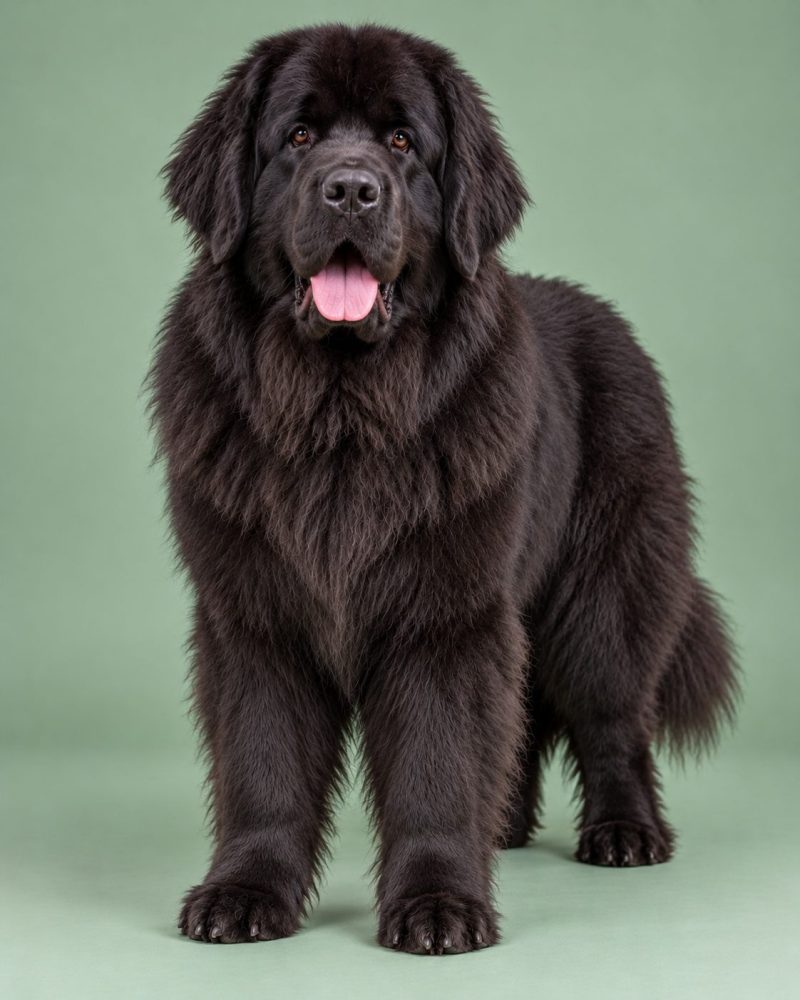
- Group
- Working
- Size
- Giant
- Weight
- 100 to 150 lb
- Height
- 26 to 28 in
- Lifespan
- 9 to 11 years
- Coat
- Long
- Origin
- Canada
- Puppy price
- $1,500 to $3,500
- Monthly cost
- $200 to $400 a month
Prices are rough US ranges and vary a lot by region.
Good for
Watch out
The ten scores
higher is easier to live with higher means more work, noise or cost. All scores 1 to 5.
What living with a Newfoundland is like
Drool will end up on your walls. A Newfoundland shakes its head and sends ropes of slobber across the room, and owners keep towels by the door, in the car and next to the couch. That, plus a dog of 100 to 150 lb with a thick coat that sheds all year, is the daily price of the breed. The other price is time. Many Newfs live only about 9 to 11 years, and joint and heart problems are common.
So why do people adore them? Newfies are famously patient. They worked for fishermen on the island of Newfoundland, hauling nets and pulling people out of cold water. Many still try to rescue swimmers who do not need it. They tend to be gentle with kids and easy with other pets. Most are calm indoors and happy to lie across a doorway for hours. They learn well with kind, steady training and get upset by shouting.
Size is the other honest problem. A Newf puppy can knock a toddler flat, and an adult can pull a grown man off his feet when it spots a pond. You will need a big vehicle, a strong back, and a budget for food, grooming and vet bills that match the dog. Costs vary by region, but they are never small. Heat is hard on this breed, so air conditioning matters in summer. For a family in a cooler place with a yard and a love of water, few dogs are sweeter company.
Care basics
Exercise
Newfies need less than you might guess. About 30 to 60 minutes a day of easy walking and play keeps most fit. Swimming is the best treat you can give one, since it works muscles without pounding the joints. Skip jogging, and while a puppy grows, keep stairs and jumping to a minimum.
Grooming
Plan on brushing two or three times a week, and daily during the spring and fall shed. Work down to the skin, because mats form behind the ears and on the back legs. A professional groomer every couple of months helps a lot. Dry the coat well after swims to prevent hot spots.
Training
Start leash manners while the puppy is still small enough to hold. By six months it may outweigh you. Newfies respond to praise and calm repetition, and they shut down if handled roughly. Teach a solid down, a polite greeting with four feet on the floor, and a wait at car doors.
Feeding
Big dogs mean big grocery bills, and a Newf can finish a large bag in a couple of weeks. A growing pup needs food made for giant breeds, aimed at steady growth instead of speed. Adults eat twice daily, then lie low for a while. Put a mat under the water bowl, since half of every drink leaves in the beard.
Health checks
The breed club asks breeders to screen hips, elbows and the heart, and to test for cystinuria. Ask for the paperwork. Your vet should listen to the heart at every visit, since a murmur can be the first sign of trouble. Watch for stiffness after rest. Your vet can tell you what to screen for.
Home setup
A house with a yard and cool floors works best. Newfies love cold weather and suffer in heat, so in summer give shade, air conditioning and a kiddie pool. Expect hair and drool on furniture. You will need a vehicle with room for a giant dog, and possibly a ramp as it ages.
Health conditions common in the breed
| Condition | What to know |
|---|---|
| Subvalvular aortic stenosis | An inherited narrowing below a heart valve. Mild cases may never cause trouble, but severe ones can lead to fainting or sudden death, so heart checks matter. |
| Hip and elbow dysplasia | Both show up far more often in Newfs than in dogs overall. Keeping the dog lean takes strain off its joints. |
| Cystinuria | A genetic condition that forms stones in the bladder or kidneys. A DNA test exists, and straining to pee is a reason to call your vet right away. |
Not every Newfoundland will have these. Your vet can tell you what to screen for and when.
Common behaviour questions
Why does my Newfie drag me toward every lake?
The pull to water is bred in. Practice walking calmly near water with great treats, and use a front-clip harness. Plan regular swim time so the urge has an outlet.
Why does my Newf grab my arm when I go into the water?
Many Newfies try to tow swimmers back to shore. Teach a wait on the shore and swim together only after practice. Its nails and weight can scratch or tire you, so stay alert.
My Newf pup sits down on walks and will not move. What now?
Big puppies tire fast, and some are simply stubborn about it. Keep walks short and fun, carry treats, and never drag it. Ask your vet if it seems sore, since joint pain can look like stubbornness.
FAQ
Were Newfoundlands bred to save people?
They were working dogs for fishermen, hauling nets and carts, and water rescue grew out of that life. Many still train and test for water rescue work today.
Can I keep a Newf in Florida or Texas?
It can be done, but it takes air conditioning, shade and walks only in the cool early hours. Heavy panting and a dog that will not get up are warning signs. Never leave a Newf in a warm car.
Is a Landseer a separate breed?
In the US, a Landseer is a black and white Newfoundland. Some other countries show the Landseer as its own breed.
Not veterinary advice. Breed traits are averages and every dog is an individual. Talk to your vet about your own dog's health.
Sources
- en.wikipedia.org /wiki/Newfoundland_dog
- chewy.com /education/dog-breeds/newfoundland
- ucdavis.edu /news/gene-mutation-heart-disease-newfoundland-dogs-identified
Similar breeds to compare
The 10-question quiz asks about your home, your week and your patience, then points you to one breed to read about first.