Australian Cattle Dog
A tireless Australian herder that needs a job every single day
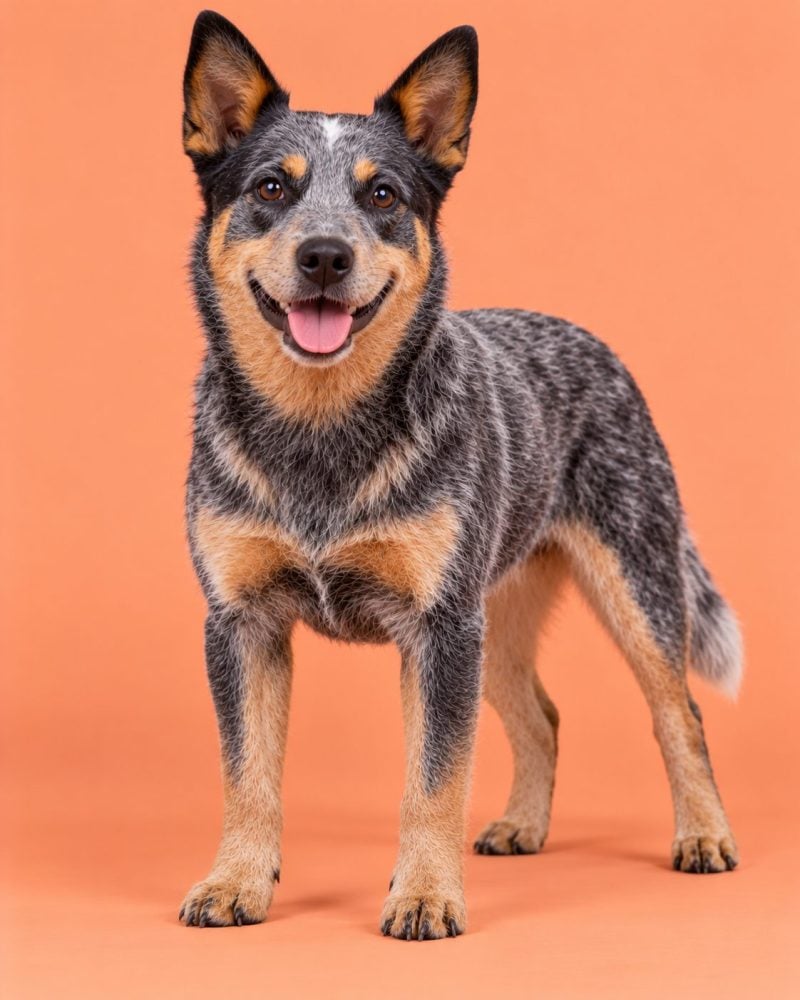
- Group
- Herding
- Size
- Medium
- Weight
- 35 to 50 lb
- Height
- 17 to 20 in
- Lifespan
- 12 to 16 years
- Coat
- Short
- Origin
- Australia
- Puppy price
- $800 to $2,500
- Monthly cost
- $80 to $150 a month
Prices are rough US ranges and vary a lot by region.
Good for
Watch out
The ten scores
higher is easier to live with higher means more work, noise or cost. All scores 1 to 5.
What living with a Australian Cattle Dog is like
Bred to drive cattle across huge Australian distances, this dog has no off switch until it has worked. Two hours a day is a starting point, not a stretch goal. A Cattle Dog that only gets a short walk will invent its own jobs. Chewing the door frame is one. Herding your kids is another. This breed suits people who already lead an active life and want a partner in it, not people hoping a dog will get them moving.
That herding habit deserves a plain warning. Many Cattle Dogs nip at heels, especially of running children, because that is how they were bred to move stock. Training and supervision can manage it, but a home with toddlers is a tough fit. They are also often reserved with strangers and protective of their own people. First-time owners often struggle, because a Cattle Dog learns bad habits as fast as good ones.
For the right owner, they are brilliant. Smart, tough and loyal, a Cattle Dog wants to do things with you: hiking, running, agility, farm work, long fetch sessions. The short coat is close to wash and wear, apart from one big shed a year. Health is generally solid, and many live well into their teens. Once its needs are met, it can be calm and steady indoors, stretched out at your feet after a full day. Day to day costs are modest next to many breeds, though prices vary by region. You get a partner, not a pet who naps all day.
Care basics
Exercise
Plan for at least two hours of activity, and make some of it hard thinking work. Running, herding classes, agility, flyball or a long hike all help. Give it a task on walks, like carrying a toy or practicing heel. A tired Cattle Dog is a pleasant house dog.
Grooming
About as easy as it gets. A weekly brush removes dead hair. Once a year the undercoat blows out, and you will need a few days of daily brushing. Bathe only when it rolls in something. Check paws and nails after rough ground.
Training
Very trainable, but it needs a clear, fair handler and plenty of variety. Teach a reliable leave it and give it something better than nipping, like holding a toy. Meet lots of people as a puppy so wariness of strangers does not turn into fear or guarding.
Feeding
A working Cattle Dog and a pet one eat very differently, so match the bowl to the week. Busy weekends may call for a bit more, and quiet stretches for less. Serve part of the daily food in puzzle toys or training sessions, which gives that brain something to chew on.
Health checks
Ask breeders about hearing tests on puppies and a DNA test for the inherited eye disease seen in the breed. Hip and elbow checks matter too. Injuries are a real risk for such active dogs, so get limping looked at. Your vet can tell you what to screen for.
Home setup
Not an apartment dog. A house with a secure, tall fence suits it best, along with a family that spends a lot of time outdoors. Leave it alone in the yard all day and it may dig or escape. It will happily trail you around the property instead.
Health conditions common in the breed
| Condition | What to know |
|---|---|
| Deafness | Inherited deafness shows up in the breed, and one Australian study found it in about 1 in 10 dogs. A BAER hearing test can check puppies. |
| Progressive retinal atrophy | A late onset form called PRCD can lead to blindness. A DNA test lets breeders avoid producing affected puppies. |
| Injuries | Cruciate tears, fractures and lameness are more common than illness in such active dogs. Warm up before hard runs and keep your dog lean. |
Not every Australian Cattle Dog will have these. Your vet can tell you what to screen for and when.
Common behaviour questions
How do I stop my Cattle Dog nipping my kids' ankles?
Running children trigger the herding drive. Have kids stop and stand still, and redirect the dog to a toy it can grip. Supervise play and give the dog a quiet spot to retreat to.
Why does my Heeler stare at me all evening?
It is waiting for the next job. Give it a chew, a puzzle toy or a short training game, then teach it to settle on a mat.
My Cattle Dog barks at strangers. Is it aggressive?
Not necessarily. Many are wary and protective by nature. Let it watch strangers from a distance and reward calm, and get a trainer's help if it lunges or snaps.
FAQ
Is a Blue Heeler the same as an Australian Cattle Dog?
Yes. Blue Heeler and Red Heeler are nicknames based on coat color, and both are the same breed.
Can a Cattle Dog run with me?
Once it is fully grown, many love running with their owners. Ask your vet when the joints are ready, and build distance slowly.
Are Cattle Dogs one-person dogs?
Many bond most strongly with one person but stay affectionate with the whole family. They tend to be cool with strangers.
Not veterinary advice. Breed traits are averages and every dog is an individual. Talk to your vet about your own dog's health.
Sources
- en.wikipedia.org /wiki/Australian_Cattle_Dog
- pdsa.org.uk /pet-help-and-advice/looking-after-your-pet/puppies-dogs/medium-dogs/australian-cattle-dog
Similar breeds to compare
The 10-question quiz asks about your home, your week and your patience, then points you to one breed to read about first.