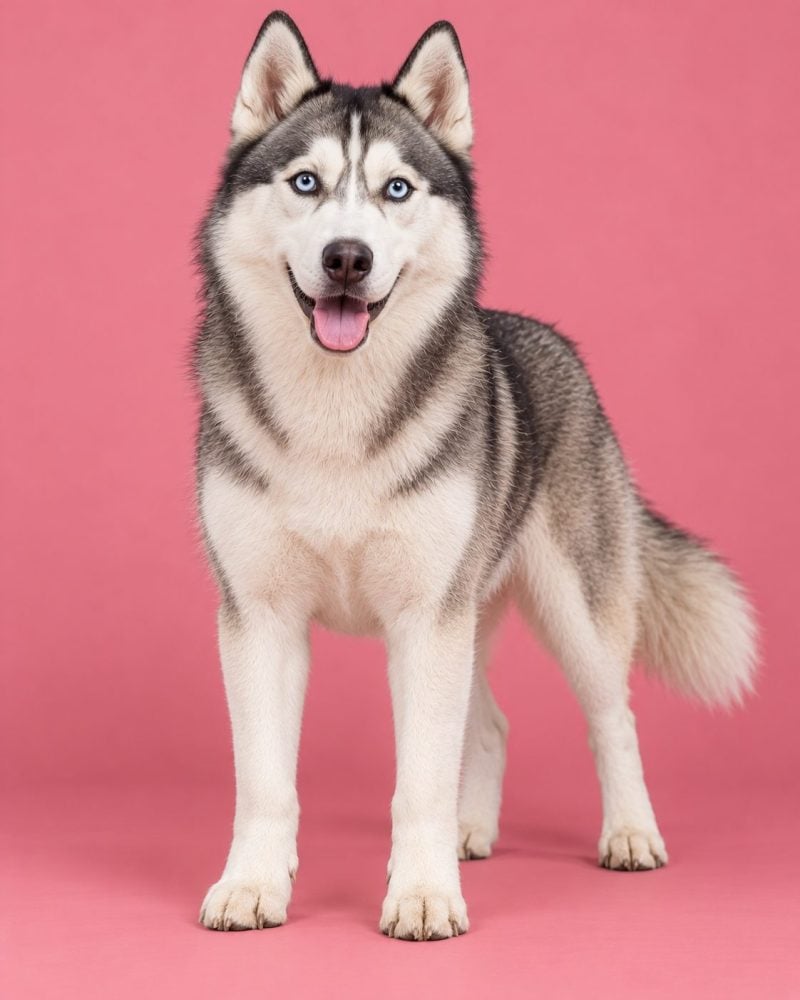
Siberian Husky
A friendly sled dog built to run, howl and escape
- Group
- Working
- Size
- Medium
- Weight
- 35 to 60 lb
- Height
- 20 to 23.5 in
- Lifespan
- 12 to 14 years
- Coat
- Medium
- Origin
- Siberia (Russia)
- Puppy price
- $1,000 to $2,500
- Monthly cost
- $120 to $250 a month
Prices are rough US ranges and vary a lot by region.
Good for
Watch out
The ten scores
higher is easier to live with higher means more work, noise or cost. All scores 1 to 5.
What living with a Siberian Husky is like
The first time your Husky gets over your fence, you will understand the breed. Siberians were bred by the Chukchi people of northeast Asia to pull light sleds over long distances. They were built to run, and they still want to. Give one a gap, an open door or a loose collar, and it may be a mile away before you find your keys. Many owners learn this the hard way.
That urge to roam is the main downside, and training does not erase it. Most owners never trust a Husky off leash outside a fenced area. Add a strong prey drive toward cats and small animals, plus a coat that sheds in drifts twice a year. Expect hair on the couch, in the car and in your coffee. This is a dog for people who like a challenge.
The upside is a dog with no grudge in it. Huskies are friendly with strangers, usually social with other dogs and gentle with families. They make awful guard dogs. A Husky that gets its run tends to be calm and cheerful in the house. Many talk instead of bark, with howls, yips and long complaints. They need about two hours of real exercise most days. In a warm climate, that work has to happen at dawn or after dark, because the thick coat traps heat. Costs run about average for a medium dog, though they vary by region.
Care basics
Exercise
PDSA suggests at least two hours a day, split into a few sessions. Running beside a bike, hiking and canicross all suit the breed. A bored Husky digs, chews and howls. On hot days, move the work to early morning or evening and watch for heavy panting.
Grooming
The double coat blows out heavily in spring and fall. Brush a few times a week, and every day during those sheds, with an undercoat rake. AKC describes the breed as fastidious, and many keep themselves clean, so baths are rare. Do not shave the coat.
Training
A Husky is smart but asks what is in it for them. Use rewards, keep lessons fun and expect less polish than with a herding breed. Recall is the weak spot. Practice it for years, but use a long line in open spaces anyway. Group classes help it learn manners around distractions.
Feeding
Sled dogs were bred to work hard on little food, and AKC notes Huskies keep a healthy weight on less than other dogs their size. Go by body shape, not the chart on the bag. Busy winter weeks may call for more, quiet weeks for less. A slow feeder bowl helps the gulpers.
Health checks
The breed club urges yearly eye exams for breeding dogs, since cataracts and other eye problems can appear later. Ask for current reports on both parents. At home, note any cloudiness in the eyes or bumping into things in dim light, and book a vet visit.
Home setup
Your fence needs to be tall, solid and secured at the base, because Huskies dig under as well as climb over. Check gates daily. A crate or a dog-proof room helps while they are young. They do poorly alone, so a busy home suits them far better than an empty one.
Health conditions common in the breed
| Condition | What to know |
|---|---|
| Juvenile cataracts | Clouding of the lens that can show up as early as 3 months. The breed club calls it the most common of the inherited eye problems in Siberians. |
| Progressive retinal atrophy | The Husky form is X-linked and causes night blindness first, then day blindness. A DNA test can find carriers. |
| Corneal dystrophy | Fatty deposits appear in the clear front of the eye, often in young adults. It seldom affects vision, and your vet can tell you what to screen for. |
Not every Siberian Husky will have these. Your vet can tell you what to screen for and when.
Common behaviour questions
Why does my Husky howl when I leave?
Huskies are social and vocal, so being alone often comes out as a howl. Practice short departures and come back before the noise starts. A long run and a food puzzle before you go help a lot.
Why does my Husky dig holes all over the yard?
Digging is normal for the breed, partly to cool off and partly for fun. Give it a digging pit with buried toys. Fill old holes and keep it busy.
Why does my Husky pull so hard on the leash?
It was bred to pull, and a collar gives it something to lean into. A front clip harness and rewards for a loose leash help. Some owners turn pulling into a sport like canicross.
FAQ
Can a Husky live in a hot state?
Many do, with care. Give shade and water, exercise in cool hours and learn the signs of heatstroke. Long hot summers make it hard to give this much exercise safely.
Are Huskies the same as Alaskan Malamutes?
No. The Malamute is a larger, heavier freight dog. The Siberian is lighter and was bred for speed over long distances.
Why do some Huskies have blue eyes?
The breed standard allows brown eyes, blue eyes, one of each or a mix in one eye. It is a normal part of the breed. Ask for eye exam results whatever the color.
Not veterinary advice. Breed traits are averages and every dog is an individual. Talk to your vet about your own dog's health.
Sources
- akc.org /dog-breeds/siberian-husky/
- shca.org /eye-testing
- pdsa.org.uk /pet-help-and-advice/looking-after-your-pet/puppies-dogs/large-dogs/siberian-husky
Similar breeds to compare
The 10-question quiz asks about your home, your week and your patience, then points you to one breed to read about first.