German Shepherd Dog
A brilliant working dog that needs a job and a vacuum
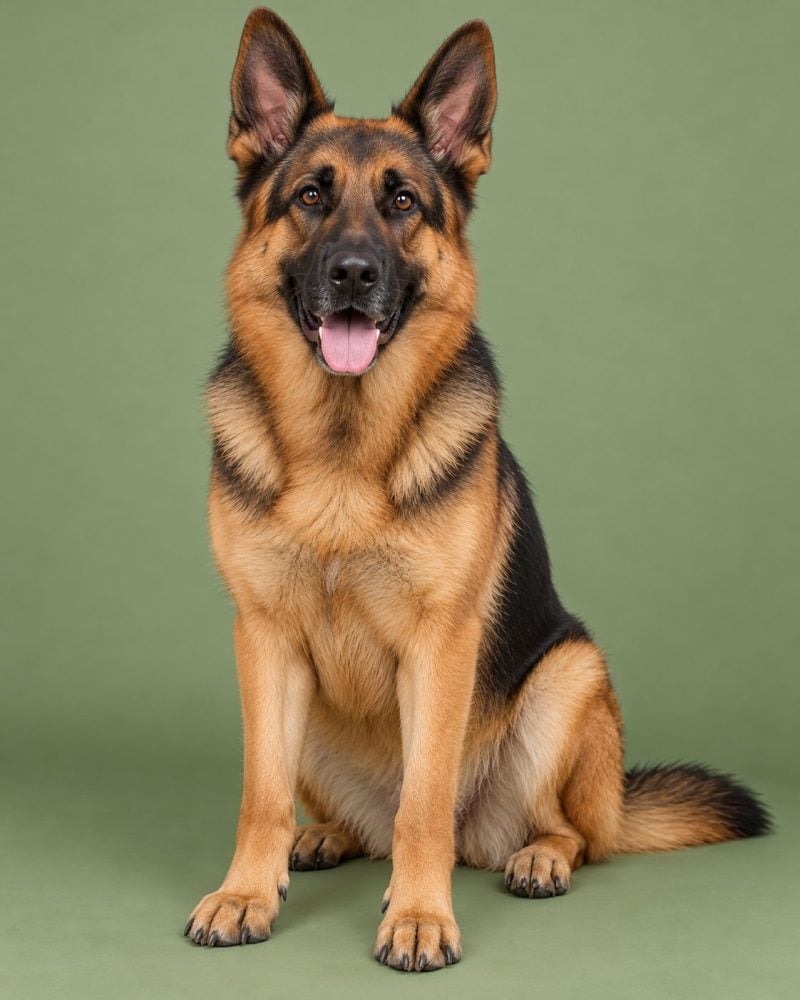
- Group
- Herding
- Size
- Large
- Weight
- 50 to 90 lb
- Height
- 22 to 26 in
- Lifespan
- 7 to 10 years
- Coat
- Medium
- Origin
- Germany
- Puppy price
- $1,500 to $3,500
- Monthly cost
- $150 to $300 a month
Prices are rough US ranges and vary a lot by region.
Good for
Watch out
The ten scores
higher is easier to live with higher means more work, noise or cost. All scores 1 to 5.
What living with a German Shepherd Dog is like
Ask a German Shepherd to do nothing all day, and it will invent a job. It might herd the kids, patrol the fence or take apart the couch cushions. This is a working dog built for herding, police and search work, and it needs real mental and physical effort every day. Without that, many shepherds grow anxious, noisy or destructive.
Shed hair is the other daily fact. Owners joke about the German Shedder for a reason: the coat drops hair all year, with two big blowouts in spring and fall. A shepherd is also watchful by nature. Most are loving with their own family and reserved with strangers. Some become reactive toward other dogs without careful early socializing, and that takes work in the first year.
In the right hands, few breeds give back more. A shepherd learns fast, loves training and bonds hard with its people. It suits an owner who wants to train, hike or try a sport such as tracking or obedience, and who can stay calm and consistent. A beginner can manage one with a good trainer from the start. The breed was shaped in Germany around 1900 by Max von Stephanitz, a cavalry officer who valued brains and usefulness over looks. Modern shepherds still carry that drive, for better and for worse, and they want you to use it.
Care basics
Exercise
Give a grown shepherd about two hours of mixed activity each day: walks, fetch, hiking and some brain work. Ten minutes of tracking or puzzle feeding tires it more than another mile. Avoid forced running and hard jumps until your vet says the joints are mature, often around 18 months.
Grooming
Brush two or three times a week, and every day during spring and fall shedding. An undercoat rake pulls loose hair before it lands on the floor. Baths are only needed now and then. Trim nails, check the big upright ears for dirt, and brush teeth a few times a week.
Training
Start the day the puppy comes home. Shepherds want structure and clear rules, and they learn bad habits as fast as good ones. Reward-based training works well with this smart breed. Plan lots of calm meetings with people, dogs and places before 16 weeks, then keep it up through the teen months.
Feeding
Big, deep-chested dogs like this one carry a bloat risk. Many owners split the day's portion into two or three meals and keep hard play away from mealtimes. A large-breed puppy formula helps bones grow at a steady pace. A lean shepherd puts less strain on its hips.
Health checks
Ask for hip and elbow ratings on both parents and a DNA test for degenerative myelopathy. Learn the signs of bloat: retching with nothing coming up, a swollen belly and restlessness are an emergency. In older dogs, watch for scuffed back paws or wobbly hind legs.
Home setup
A house with a tall, secure fence works best. Shepherds can jump, and some will try to patrol past the yard. They dislike being shut away from the family and do best living indoors with you. A crate used for short rests helps teach calm, never as all-day storage.
Health conditions common in the breed
| Condition | What to know |
|---|---|
| Hip and elbow dysplasia | One of the most familiar problems in the breed. It can cause limping, stiffness and arthritis, sometimes from a young age. |
| Degenerative myelopathy | A slow spinal cord disease that weakens the back legs in older dogs. There is no cure, but a DNA test helps breeders lower the risk. |
| Bloat (GDV) | The stomach fills with gas and can twist. It is life-threatening and needs a vet right away. |
Not every German Shepherd Dog will have these. Your vet can tell you what to screen for and when.
Common behaviour questions
Why does my shepherd bark at every person who walks past the window?
Guarding the home is part of the breed. Block the view of the street, reward quiet looks, and give a calm job like going to a mat. Thank your dog for the alert, then ask for quiet.
Why does my German Shepherd nip at the kids when they run?
That is herding instinct, not meanness. Stop chase games, teach the kids to stand still, and give the dog a ball to chase instead. Get help from a trainer if it keeps happening.
Why does my shepherd follow me everywhere and whine?
Many shepherds want to be part of everything you do. Teach a settle on a bed, practice short alone time, and check that daily exercise is enough. Whining often drops when the brain is tired.
FAQ
Can a German Shepherd live with cats?
Many do, especially when raised with one from puppyhood. Some have a strong urge to chase anything that runs. Introduce slowly, on leash, and reward calm looks.
Why do some shepherds have such sloped backs?
Some show lines are bred with a strong slope to the back. Many owners and vets prefer a more level back. Ask a breeder why their dogs look the way they do.
Will a shepherd protect my home without special training?
Most will bark and keep watch on their own. Formal protection work is a skill for experts, not a weekend project. A steady, well-socialized shepherd is safer than one taught to bite.
Not veterinary advice. Breed traits are averages and every dog is an individual. Talk to your vet about your own dog's health.
Sources
- ukcdogs.com /german-shepherd-dog
- westminsterkennelclub.org /breed/german-shepherd-dog/
Similar breeds to compare



The 10-question quiz asks about your home, your week and your patience, then points you to one breed to read about first.