Akita
A quiet, loyal Japanese guardian that often wants to be your only dog
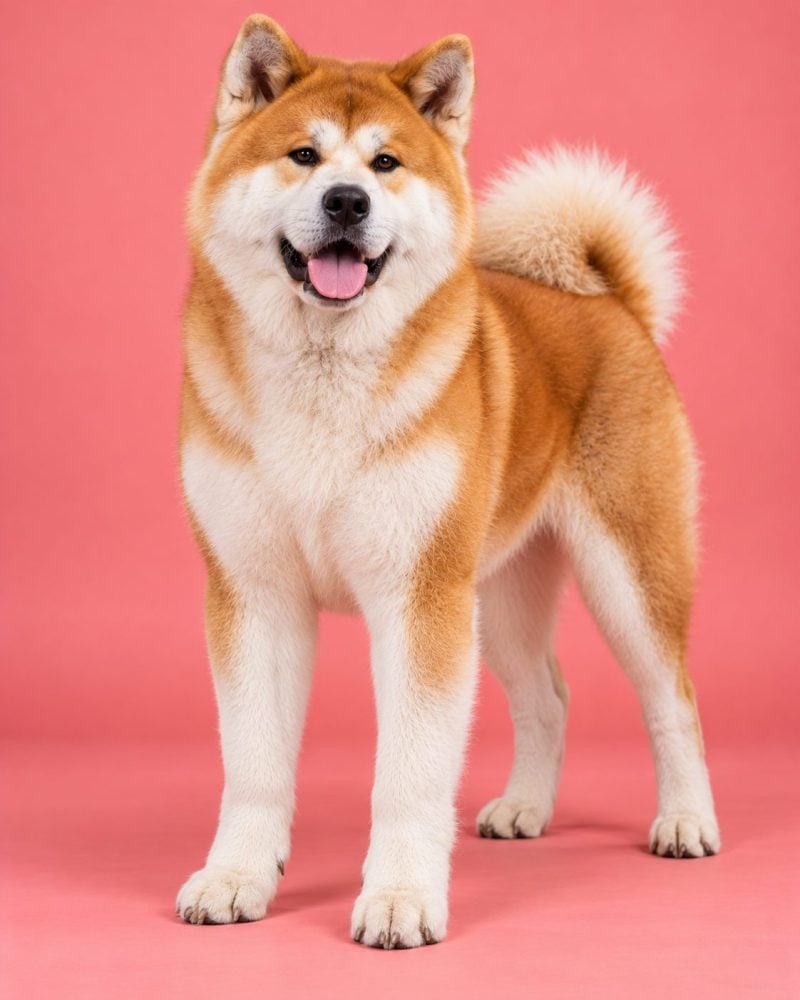
- Group
- Working
- Size
- Large
- Weight
- 70 to 130 lb
- Height
- 24 to 28 in
- Lifespan
- 10 to 14 years
- Coat
- Medium
- Origin
- Japan
- Puppy price
- $1,500 to $3,500
- Monthly cost
- $120 to $250 a month
Prices are rough US ranges and vary a lot by region.
Good for
Watch out
The ten scores
higher is easier to live with higher means more work, noise or cost. All scores 1 to 5.
What living with a Akita is like
Akitas are quiet dogs. They rarely bark, they do not beg for attention, and they watch everything. Hachiko, the dog who waited at a Tokyo train station for years after his owner died, was an Akita. That loyalty is real, but it usually goes to one family, not the world.
Now the serious part. Many Akitas do not like other dogs, and two of the same sex can be a real risk together. In one Polish owner survey, about 59 percent of Akitas showed aggression toward other dogs or animals. Early socialization helps, but it does not erase the trait. Add a body that can top 100 lb, and you need someone who reads dog body language, holds a leash firmly and skips the dog park. This is not a breed for a first-time owner, and that is no knock on the dog.
With the right person, an Akita is calm and clean in the house. It often grooms itself a bit like a cat and tends to house train early. It is reserved with strangers and protective of home, so visitors need a slow, planned introduction. It will not do tricks to please you. It does what makes sense to it, and it remembers how you treated it. Twice a year the thick double coat comes out in clumps, and the rest of the year it sheds steadily. Most Akitas want a fenced yard, a fixed routine and a person who stays calm and fair. In that home, it becomes a steady, dignified house dog that guards without fuss.
Care basics
Exercise
Plan on about an hour a day, split into two walks plus some free time in a fenced yard. Pick quiet routes and hours to avoid passing other dogs up close. Akitas enjoy cold weather hikes. Off-leash dog parks are a bad fit for most adults of this breed, even friendly ones.
Grooming
Brush once a week most of the year with a pin brush and an undercoat rake. In spring and fall the undercoat lets go in big tufts, and daily brushing keeps it off your floors. Bathe only when needed. Start touching paws early, because a grown Akita that hates nail trims is hard to manage.
Training
Keep lessons short, calm and fair. Akitas get bored with drills and may simply walk off. Reward-based training works, while harsh corrections tend to backfire with a dog this proud. A puppy class with a trainer who knows guarding breeds is worth the drive. Work on leave it, a sit for greetings and calm handling.
Feeding
Akitas can be serious about food. Many guard their bowl from other pets and sometimes from people, so serve meals in a closed room or a crate, away from foot traffic. Two smaller meals a day and a calm hour after eating may lower bloat risk. Big puppies should grow slowly, so let your vet set portions.
Health checks
Breeders should test hips, elbows, eyes and thyroid. Ask to see the results. At home, notice weight gain with a dull coat, which can point to low thyroid. Patchy hair loss with scaly skin, or eyes that suddenly look red and sore, deserve a vet visit soon. Your vet can tell you what to screen for.
Home setup
A house with a solid six-foot fence suits most Akitas better than a flat. Keep visitors and delivery people on the other side of a door until the dog is settled. Many Akitas do best as the only pet. In a multi-dog home, feed apart, hand out toys only when you are watching, and avoid same-sex pairs.
Health conditions common in the breed
| Condition | What to know |
|---|---|
| Hip dysplasia | A loose hip joint that can lead to arthritis. Breeders can screen parents with hip x-rays. |
| Hypothyroidism | Low thyroid is common in the breed. It can cause weight gain, low energy and coat changes, and is usually managed with daily medicine. |
| Uveodermatologic syndrome | An immune disease that attacks the eyes and skin pigment, sometimes called VKH-like syndrome. Red, painful eyes or a nose losing color needs prompt vet care. |
Not every Akita will have these. Your vet can tell you what to screen for and when.
Common behaviour questions
My Akita was fine with other dogs as a puppy. Why the change at two?
Many Akitas grow less tolerant of other dogs as they mature, often between one and three years old. This is a breed trait, not your failure. Keep greetings short or skip them, and work with a trainer before it turns into a fight.
Why does my Akita block the hallway when friends visit?
It is guarding its home and its people. Put the dog behind a gate before the door opens, let the guest sit down, and bring it out on a leash once things are calm. Never let guests force a greeting.
Why does my Akita ignore a command it clearly knows?
Akitas weigh whether a request is worth the effort. Repeating yourself teaches it that the first ask does not count. Ask once, reward well, and use things it wants, like going outside, as the payoff.
FAQ
Is the Akita the same as the Japanese Akita Inu?
Not quite. After World War II the American type grew heavier, with a bear-like head and any color allowed. The Japanese type is lighter and more fox-like, and some registries treat them as separate breeds.
Is an Akita a good watchdog?
Yes, in a quiet way. Akitas rarely bark without reason, so when yours does, it is worth a look. The flip side is that it may treat friendly strangers as threats without good training.
Could an Akita share a home with a cat?
Sometimes, if they grow up together and the cat has high escape routes. Strange cats outside are another story. Many Akitas have a strong prey drive, so never assume.
Not veterinary advice. Breed traits are averages and every dog is an individual. Talk to your vet about your own dog's health.
Sources
- en.wikipedia.org /wiki/Akita_(dog)
- chewy.com /education/dog-breeds/akita
- akc.org /dog-breeds/akita/
Similar breeds to compare
The 10-question quiz asks about your home, your week and your patience, then points you to one breed to read about first.