Havanese
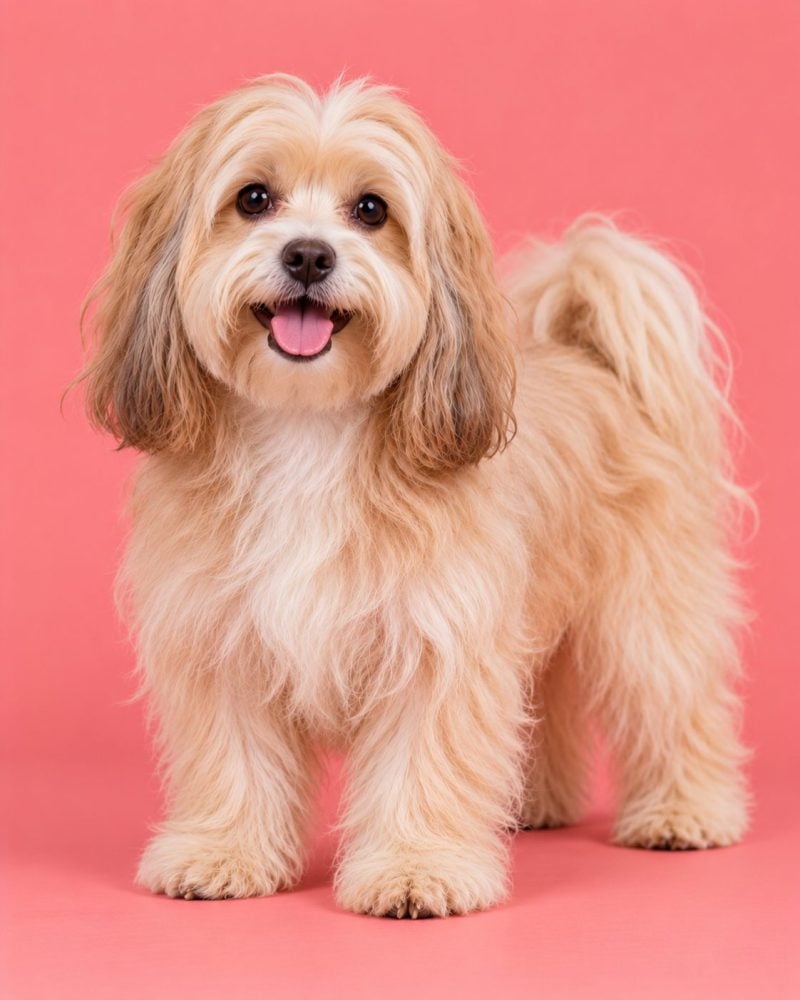
Cuba's cheerful little shadow, happiest in the middle of family life
- Group
- Toy
- Size
- Small
- Weight
- 7 to 13 lb
- Height
- 8.5 to 11.5 in
- Lifespan
- 14 to 16 years
- Coat
- Long
- Origin
- Cuba
- Puppy price
- $1,500 to $3,500
- Monthly cost
- $100 to $200 a month
Prices are rough US ranges and vary a lot by region.
Good for
Watch out
The ten scores
higher is easier to live with higher means more work, noise or cost. All scores 1 to 5.
What living with a Havanese is like
Havanese come from Cuba, where they are the national dog, and they still act like they were made for a busy family kitchen. They want to be where people are. A Havanese will sit on your feet while you cook, greet your guests, then follow the loudest kid around the yard.
Here is the catch: the coat. It is long, soft and silky, and it knots fast, especially under the legs and behind the ears. Daily brushing is normal if you keep it long. Lots of owners clip it short, which helps, but even then you are booking a groomer every month or two. Someone who knows they will skip grooming should pick a different breed.
On the plus side, this is one of the easier toy breeds to live with. It is cheerful, it learns quickly, and it can hold its own in gentle rough play with kids who know the rules. About 30 minutes of exercise a day keeps most adults happy, so city flats work fine. It usually gets along with other dogs and often with cats too. It does lean on you emotionally, so long empty days are hard on it. Many travel well, content in a car or on a busy cafe patio as long as their person is close. Grooming and vet costs vary by region, and they add up over a life that often runs past 14 years.
Care basics
Exercise
Half an hour a day is a good base: a walk around the block and a game of chase in the living room. Havanese like to play more than they like to march. Many enjoy beginner agility or trick classes, which work the brain as well as the legs.
Grooming
If you keep the coat long, brush and comb it every day, right down to the skin. A short pet clip cuts that to a few times a week plus regular groomer visits. Check the eyes and ears for trapped hair. Some owners cord the coat, which is a skill to learn from someone experienced.
Training
Havanese learn quickly and like to please, which makes them a decent pick for a first dog. Keep sessions playful. Start alone time training in the first weeks home. Introduce new people, places and sounds early so the friendly side wins over shyness.
Feeding
Small dog, steady habits. Most adults do well on two meals at set times, which also makes potty breaks easier to predict. The fluffy coat can hide weight gain, so feel for ribs with your hands rather than trusting your eyes. Your vet can give you a target weight.
Health checks
Ask about knee checks and eye exams, since both come up in the breed. Hearing can be tested too. If a puppy seems slow to grow or acts strange after meals, mention it. Your vet can tell you what to screen for.
Home setup
An apartment works if someone is around a good part of the day. Bring shade and water on summer walks, as you would for any small dog. Give it a resting spot near the family rather than a far corner. It does not need a yard, though it will enjoy one.
Health conditions common in the breed
| Condition | What to know |
|---|---|
| Patellar luxation | Loose kneecaps are one of the more common problems in the breed. Your vet can feel for them during a routine exam. |
| Portosystemic shunt | A study found liver shunts far more often in Havanese than in mixed breeds. Signs can include stunted growth and dullness after meals. |
| Eye disease | Cataracts and progressive retinal atrophy are both listed for the breed. Ask breeders about eye exams on the parents. |
Not every Havanese will have these. Your vet can tell you what to screen for and when.
Common behaviour questions
Why does my Havanese follow me into the bathroom?
This breed was made to be a companion and stays close by habit. It is normal, but teach a settle on a mat so it can relax without being in your lap all day.
My Havanese goes wild when guests arrive. How do I calm it?
Havanese love people, sometimes too much. Put it behind a gate or on a leash when the bell rings, and reward four paws on the floor. Let guests greet it only once it is calm.
Why does my Havanese run laps around the house at night?
Those bursts, often called zoomies, are common in young, playful dogs. Fit a walk and a play session in earlier in the evening, and clear breakables from its racetrack.
FAQ
Is a Havanese a good first dog?
It is one of the friendlier choices for beginners because it learns fast and is usually sociable. Just be honest with yourself about grooming time.
Long coat or short haircut, which is better?
Neither is wrong. Long looks lovely but needs daily work, while a short clip is easier and still looks cute.
Is a Havanese the same as a Bichon?
They are related, both small dogs of the Bichon type, but the Havanese is its own breed from Cuba. It also comes in many colors, not only white.
Not veterinary advice. Breed traits are averages and every dog is an individual. Talk to your vet about your own dog's health.
Sources
- en.wikipedia.org /wiki/Havanese_dog
- pdsa.org.uk /pet-help-and-advice/looking-after-your-pet/puppies-dogs/small-dogs/havanese
Similar breeds to compare
The 10-question quiz asks about your home, your week and your patience, then points you to one breed to read about first.