Dalmatian
A tireless spotted runner with real hearing and bladder health risks
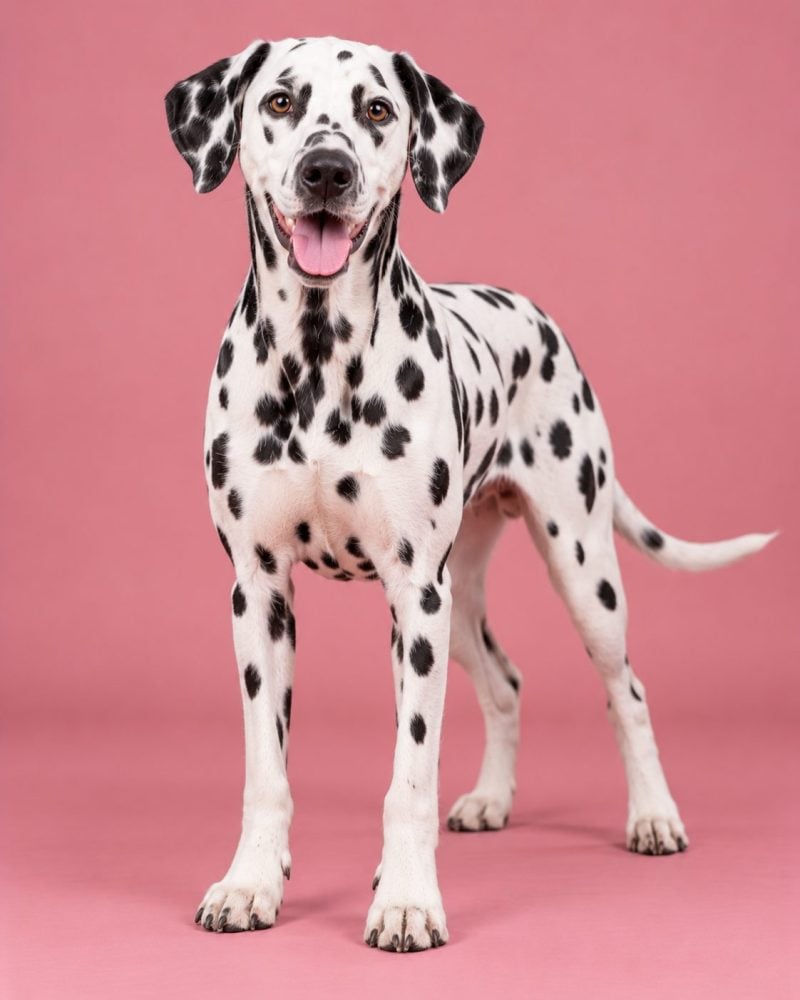
- Group
- Non-Sporting
- Size
- Medium
- Weight
- 45 to 70 lb
- Height
- 19 to 24 in
- Lifespan
- 11 to 13 years
- Coat
- Short
- Origin
- Croatia
- Puppy price
- $1,000 to $2,500
- Monthly cost
- $100 to $200 a month
Prices are rough US ranges and vary a lot by region.
Good for
Watch out
The ten scores
higher is easier to live with higher means more work, noise or cost. All scores 1 to 5.
What living with a Dalmatian is like
Spots are why people want a Dalmatian. Two health facts are why some owners wish they had read more first. Studies find about 16 to 26 percent of Dalmatians are deaf in one or both ears. And nearly every Dalmatian handles uric acid differently from other dogs, which puts the breed at risk for urinary stones. Stones can block the urethra, mostly in males, and that is an emergency. A good breeder hearing-tests every puppy with a BAER test. Your job is to keep the dog drinking plenty of water and to follow your vet's advice on diet.
Then there is the energy. Dalmatians were coach dogs, trotting for miles beside horse-drawn carriages and guarding the stable at night. Fire companies kept them for the same reasons. That stamina has not gone anywhere. A Dal needs about two hours of activity a day, and a bored one gets loud, pushy and destructive. The short white coat looks easy, but it sheds all year, and the little white hairs weave into fabric.
The upside is a clever, clownish, devoted dog. Many are wonderful running and hiking partners, and they bond hard with their people. Some are reserved with strangers and need early, steady socialization to grow into confident adults. They can be a lot for small kids, mostly because of their bouncy energy. For an active adult or family who will plan around the health issues, a Dalmatian is lively, loyal and full of personality.
Care basics
Exercise
Aim for two hours a day for a healthy adult, mixed between running, fetch, hiking and training games. Dals make great jogging partners once fully grown, around 18 months to two years. Before that, keep it softer, like walks on grass. Carry water on every outing.
Grooming
A rubber curry brush a few times a week pulls out loose hair and keeps the coat shiny. Shedding gets heavier in spring and fall. The coat has little oil and little smell, so baths are rare. Check ears, brush teeth and trim nails monthly.
Training
Dals are smart and can be stubborn, so make training a game. Use treats and play, and avoid harsh methods, which make many of them shut down or push back. For a deaf dog, hand signals work well, and a flashing porch light can call it in at night.
Feeding
Water matters more than the bowl with this breed. Keep fresh water everywhere, add water to meals, and give plenty of chances to pee. Many vets suggest a lower-purine diet, which means going easy on organ meats and some fish. Do not switch diets on your own. Ask your vet for a plan that fits your dog.
Health checks
Ask the breeder for BAER hearing results on your puppy and both parents. At home, watch for blood in the urine, straining, or peeing tiny amounts often. A male that strains with nothing coming out needs an emergency vet. Itchy skin is common too. Your vet can tell you what to screen for.
Home setup
A fenced yard helps, along with a family that is home or active much of the day. Dals hate being left out of things. Keep the gate locked, since many love to run. In an apartment, expect to walk a lot. Lint rollers will become part of your life.
Health conditions common in the breed
| Condition | What to know |
|---|---|
| Deafness | Linked to the genes behind the white coat, and more common in blue-eyed Dals. Deaf dogs can live full lives with patient, signal-based training. |
| Urate stones | A Dalmatian and Pointer backcross program has produced Dals with normal uric acid levels, and the AKC began registering them in 2011. Ask breeders whether their dogs carry the low uric acid line. |
| Dalmatian bronzing syndrome | A skin problem that gives the coat a bronze tint, often along the back, sometimes with hair loss. Your vet can look for the cause. |
Not every Dalmatian will have these. Your vet can tell you what to screen for and when.
Common behaviour questions
Why does my Dalmatian grin and show its teeth at me?
Many Dals pull back their lips in a grin when they greet you. It is a friendly display, not a threat. Watch the rest of the body: a loose, wiggly dog is just happy.
Why does my Dalmatian startle and snap when woken?
Some Dals, often ones with hearing loss, wake with a jolt. Teach the family to wake it with a gentle touch on the shoulder, and give it a quiet bed away from busy paths.
My Dal runs off at the park. Is it a lost cause?
Not at all, but it takes work. Dals were bred to cover ground, so practice recall on a long line for months before trusting it. A hearing check is worth doing too.
FAQ
Are Dalmatian puppies born with spots?
No. Puppies are born pure white, and the spots start to show in the first couple of weeks.
Should I get a liver-spotted or black-spotted Dal?
Color does not change temperament. Black and liver are the two show colors. Other shades, such as lemon, exist and make just as good pets.
Was the Dalmatian really a fire dog?
Yes. Fire companies used them to run ahead of horse-drawn engines, clear the road and guard the horses. The firehouse image stuck long after the horses left.
Not veterinary advice. Breed traits are averages and every dog is an individual. Talk to your vet about your own dog's health.
Sources
- en.wikipedia.org /wiki/Dalmatian_(dog)
- chewy.com /education/dog-breeds/dalmatian
- todaysveterinarypractice.com /?p=33168
Similar breeds to compare


The 10-question quiz asks about your home, your week and your patience, then points you to one breed to read about first.